Top Personalized Mailing Boxes Suppliers for Global Buyers
Choosing the right personalized mailing boxes supplier can shape how customers experience a brand before opening the package. A sturdy, well-printed box protects products and communicates care. For global buyers, the decision involves more than attractive artwork. Material strength, print consistency, production capacity, pricing, and delivery reliability all deserve close attention.
This guide introduces leading suppliers serving international businesses, from growing online shops to established retailers. It considers recycled cardboard options, custom dimensions, inserts, finishes, and low minimum order quantities. It also examines practical details, including sample approval, color matching, packaging tests, lead times, and communication across time zones. A supplier may offer impressive photographs, yet a physical sample can reveal weak seams or inaccurate colors. Small details matter.
No supplier is perfect. Buyers should verify certifications, factory information, quality controls, and shipping terms before placing substantial orders. Independent reviews can help, but they should not replace direct questions and documented evidence. That is especially important when boxes must travel through humid warehouses, automated sorting systems, or long-distance freight routes. A reliable partner explains limitations clearly and responds when specifications change.
The suppliers discussed here are evaluated through a buyer-focused lens. Their capabilities, customization services, sustainability practices, and international support are compared carefully. Costs can change with board grade, printing coverage, order volume, and destination. Treat this overview as a practical starting point, not a final verdict. Your product size, market expectations, budget, and delivery schedule will determine which supplier fits best.
What Are Personalized Mailing Boxes?
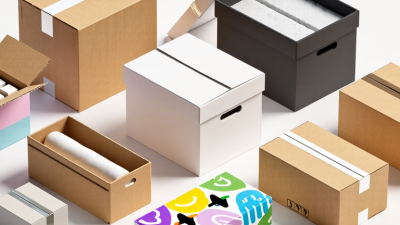
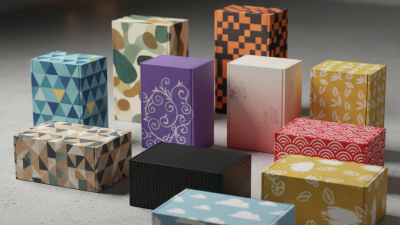
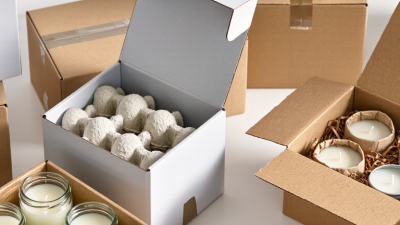
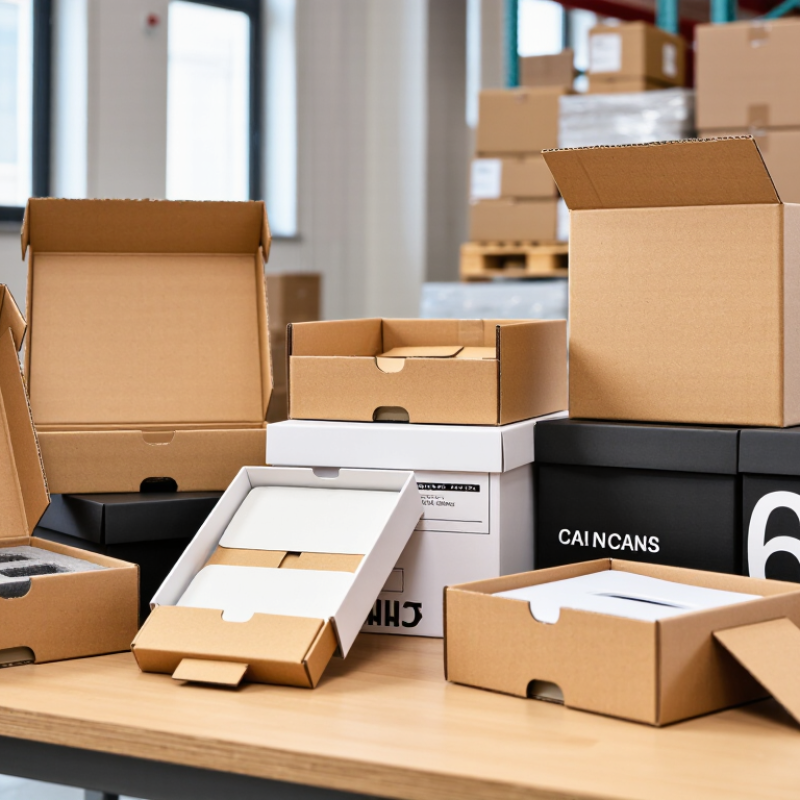
Personalized mailing boxes are shipping cartons designed around a brand’s product, customer experience, and delivery needs. Unlike plain stock boxes, they can include custom dimensions, printed artwork, protective inserts, unique closures, and handling instructions. Their structure usually combines corrugated paperboard with a self-locking flap or adhesive strip. A small candle box, for example, may use a snug insert to prevent movement during transport.
For global buyers, personalization should support performance, not only appearance. Experienced packaging teams check board strength, moisture resistance, print quality, and packing efficiency before placing a large order. A box that looks beautiful can still crush at the corners. That mistake is easy to underestimate. Requesting pre-production samples and conducting drop tests can reveal weak folds, loose inserts, or inaccurate colors. Suppliers should also provide clear material details, production timelines, carton dimensions, and quality inspection methods. Destination-market recycling and labeling requirements deserve attention as well.
Tips: Measure the packed product, not just the product itself. Leave limited clearance for cushioning. Ask for shipping samples in realistic conditions. Review the artwork at full size. Small text may disappear on textured board. I would also compare flat-pack storage space, because attractive boxes can occupy more warehouse room than expected. Sometimes, a simpler design performs better.
Top Personalized Mailing Boxes Suppliers for Global Buyers - What Are Personalized Mailing Boxes?
Personalized mailing boxes are corrugated or paperboard boxes customized with printed graphics, logos, colors, structural features, and inserts. The chart uses ISO 216 paper formats as practical references for artwork, product inserts, and printed sleeves commonly used with custom mailing boxes. The calculated areas are based on each format’s official dimensions.
Key Features of Leading Global Suppliers
Leading global suppliers treat personalized mailing boxes as shipping tools, not decorative cartons. Their teams ask about product weight, dimensions, stacking pressure, and delivery routes before proposing a structure. They offer digital proofs, physical samples, and measured prototypes. This practical sequence reduces costly surprises. A good supplier can explain flute profiles, board grades, closure styles, and print limits clearly. Some buyers focus too early on color. Protection comes first. Yet appearance still matters when the box reaches a customer’s doorstep.
Reliable suppliers publish material specifications and share test records when requested. Useful evidence may include edge-crush, compression, moisture, and drop-test results. Food-contact or sustainability claims require careful documentation, not casual wording. Suppliers serving multiple regions should understand labeling, recycling marks, import paperwork, and packaging restrictions. Requirements vary by destination. Their production controls should cover color consistency, barcode readability, die-cut accuracy, and adhesive strength. Independent audits can add confidence, although an audit cannot replace current samples and factory communication.
Strong partners provide responsive account support across time zones and realistic production schedules. They confirm minimum order quantities, tooling charges, replacement policies, and shipping terms before payment. Clear quotations prevent uncomfortable arguments later. They should also discuss recycled content, water-based inks, and right-sized designs that reduce empty space. My experience suggests that the first sample often reveals a weak corner or loose fit. That is not failure. It is useful evidence. Suppliers willing to revise drawings, document changes, and invite a second test usually earn greater trust.
How to Compare Custom Mailing Box Manufacturers
Top Personalized Mailing Boxes Suppliers for Global Buyers
Comparing custom mailing box manufacturers requires more than checking the lowest quotation. Ask about board grade, flute type, dimensions, printing method, and protective inserts. Request physical samples. Details matter.
A reliable supplier should explain compression strength, edge crush testing, and moisture resistance in clear terms. Check whether the factory controls color consistency across repeated orders. A small shade difference may affect a premium product’s presentation. Confirm production tolerances before approving the dieline. An experienced manufacturer will identify weak corners, oversized gaps, or difficult folding areas early.
Review sample quality under realistic conditions. Fill the box with your actual product, then test stacking, vibration, and drop resistance. I have seen attractive samples fail when packed with heavier items. That mistake is easy to miss. Ask for recent quality records, material declarations, and packaging compliance documents for your destination markets. Also compare minimum order quantities, tooling fees, proofing costs, lead times, and shipping terms. A low unit price can become expensive after redesigns or repeated freight charges.
Communication is another practical measure. Can the supplier answer technical questions without vague promises? Can they provide production photos, inspection procedures, and a clear replacement policy? Leave room for uncertainty. Forecasts change, and printed packaging sometimes needs revision after customer feedback. Choose a manufacturer that treats adjustments as part of responsible cooperation, not as an inconvenience.
Top Personalized Mailing Boxes Suppliers for Global Buyers - How to Compare Custom Mailing Box Manufacturers
Indicative industry benchmarks for comparing custom mailing box manufacturers. Final specifications, pricing, certifications, and delivery schedules should be confirmed in a written quotation.
| Supplier Profile |
Typical Box Styles |
Common Material Options |
Typical MOQ |
Sample Lead Time |
Bulk Production Lead Time |
Printing & Finishing |
Recycled Fiber Availability |
Best Fit for Buyers |
| Profile A |
Self-locking mailer, tuck-end mailer |
E-flute corrugated board, kraft liner, white liner |
500–1,000 units |
5–10 working days |
15–25 working days |
CMYK, spot color, matte or gloss coating |
Available on request |
Small and medium e-commerce orders |
| Profile B |
Rigid mailer, book-style box, magnetic box |
Greyboard wrapped with coated paper, kraft paper, textured paper |
300–800 units |
7–12 working days |
20–35 working days |
Offset printing, foil stamping, embossing, debossing |
Partially available |
Premium cosmetics, apparel, and gift packaging |
| Profile C |
Corrugated shipping mailer, subscription box |
B-flute or E-flute corrugated board, kraft outer liner |
1,000–3,000 units |
5–8 working days |
12–22 working days |
Flexographic or offset printing, water-based coating |
Commonly available |
High-volume fulfillment and subscription programs |
| Profile D |
Custom die-cut mailer, flat-pack shipping box |
Recycled corrugated board, kraft board, paper-based cushioning |
1,000–5,000 units |
7–10 working days |
18–30 working days |
One-color to four-color printing, die-cutting, tear strips |
Commonly available |
Sustainable packaging and cost-sensitive shipping programs |
| Profile E |
Small parcel box, insert-ready mailer |
F-flute or E-flute corrugated board, recycled kraft liner |
500–2,000 units |
5–10 working days |
15–28 working days |
Digital printing, variable data, printed inserts |
Available for selected grades |
Personalized campaigns and limited product launches |
| Profile F |
Heavy-duty mailer, multi-depth shipping box |
Double-wall corrugated board, kraft liner, reinforced corners |
1,000–3,000 units |
8–12 working days |
20–35 working days |
Flexographic printing, reinforced construction, protective inserts |
Available by specification |
Fragile, heavy, or long-distance shipments |
Key comparison checks: Confirm board grade, box dimensions, internal product weight, compression requirements, print color standard, food-contact suitability where relevant, recycled-content documentation, packaging method, Incoterms, destination duties, and approval of a physical pre-production sample.
Ordering, Quality Control, and International Shipping
Top Personalized Mailing Boxes Suppliers for Global Buyers
Ordering custom mailing boxes requires more than attractive artwork. Ask suppliers for a dieline, material certificate, compression test, and production sample. Confirm dimensions after folding, not only when flat. A box that fits tightly can still damage products during humid storage. The World Bank’s 2023 Logistics Performance Index assessed 139 economies across customs, infrastructure, tracking, and delivery timeliness. These factors should guide supplier selection, especially for cross-border orders. Choose a factory that provides clear export documents and realistic production schedules.
Quality control should happen before mass production. Approve color proofs under consistent lighting, then inspect board thickness, printing alignment, glue strength, and carton count. Use an agreed sampling plan, such as ISO 2859-1, and record defects with photographs. The International Maritime Organization and UNCTAD both highlight continuing pressure on global shipping networks. UNCTAD reported that seaborne trade contracted 0.4% in 2022. Therefore, shipping buffers are not optional. My practical concern is simple: buyers often approve samples too quickly, then discover weak corners after loading. That mistake is expensive, but preventable.
Tips: Place a small trial order before annual purchasing. Request carton dimensions and gross weight for freight quotes. Add moisture-resistant packaging when routes include tropical ports. Check whether the supplier can provide tracking updates and replacement procedures. Never rely on the promised delivery date alone; build extra days into inventory planning.

 Cosmetic Packaging
 Display Packaging
 CBD Packaging
 Retail Packaging
 Product Packaging
 Cigarette Packaging
 Candle Packaging
 Soap Packaging
 Chocolate Packaging
 Vape Packaging
 Food Packaging
 Window Packaging Boxes
 Gift Packaging
 Bakery Packaging Boxes
 Pizza Packaging
 Bottle Packaging
 Garments Packaging
 Custom Printed Bags
 Christmas Packaging
 Toy Packaging
 Cereal Packaging
 Jewelry Packaging
 Apparel Packaging
 Shipping Packaging
 Custom Pre Roll Boxes
 Dispenser packaging
 Eco Friendly Packaging
 Custom Health Packaging
 Pharmaceutical Packaging