Cosmetic Packaging
Display Packaging
CBD Packaging
Retail Packaging
Product Packaging
Cigarette Packaging
Candle Packaging
Soap Packaging
Chocolate Packaging
Vape Packaging
Food Packaging
Gift Packaging
Bakery Packaging Boxes
Pizza Packaging
Bottle Packaging
Garments Packaging
Custom Printed Bags
Christmas Packaging
Toy Packaging
Cereal Packaging
Jewelry Packaging
Apparel Packaging
Shipping Packaging
Custom Pre Roll Boxes
Dispenser packaging
Eco Friendly Packaging
Custom Health Packaging
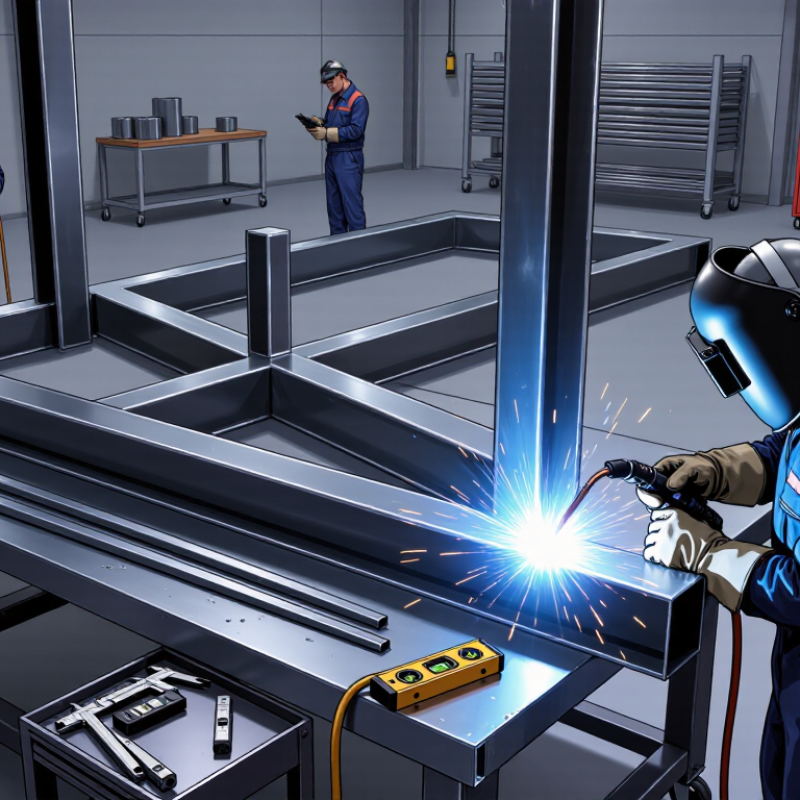
Pharmaceutical PackagingIn global manufacturing, material choice influences strength, cost, delivery, and long-term reliability. Welded Metal supports flexible production across machinery, construction, energy, transport, and industrial equipment. Its value becomes clear when designs require large frames, sealed assemblies, or customized dimensions. A skilled fabricator can join steel, stainless steel, or aluminum with controlled heat and suitable welding procedures. The result can reduce part counts, simplify assembly, and create strong connections without excessive machining.
Details matter.
Experienced manufacturers inspect joint preparation, weld penetration, surface condition, and dimensional accuracy. They also document material certificates, welder qualifications, inspection results, and batch traceability. These records help buyers evaluate quality with evidence, not promises. A production team may check a frame on a flat table, measure distortion with calibrated tools, and inspect critical welds using appropriate non-destructive testing. Such practices improve confidence across international supply chains and support responsible compliance with applicable standards.
Welded Metal is not flawless. Heat can cause distortion, residual stress, or surface changes in the heat-affected zone. Poor design, rushed inspection, or unclear drawings may create expensive rework. This is where professional judgment matters. Engineers should review load requirements, corrosion exposure, tolerances, finishing methods, and shipping conditions before production begins. Some assumptions will need revision after prototypes or field feedback. That reflection is useful, because dependable manufacturing comes from controlled processes, transparent communication, and continual improvement—not from claiming that every weld is perfect.
Welded metal is created by joining separate metal parts through heat, pressure, or both. Some processes use a filler material to strengthen the joint. Others melt the edges directly. On a factory floor, technicians may weld steel frames, aluminum housings, machine platforms, and storage assemblies. The method depends on thickness, alloy, joint design, and production volume. A clean weld can carry heavy loads while reducing the need for bolts and extra hardware.
In global manufacturing, welded assemblies support construction equipment, transportation systems, energy facilities, and industrial machinery. Their value is practical: fewer components, flexible shapes, and efficient repair. However, welding is not automatically better. Heat can cause distortion, surface cracking, or hidden weakness. A frame may look perfect but still fail inspection. Experienced teams use approved drawings, calibrated equipment, visual checks, and non-destructive testing when risk is higher. Material certificates and weld records also improve traceability across international production.
Tips: Define the joint requirements before fabrication begins. Confirm the metal grade, thickness, welding process, and inspection level. Keep surfaces dry and free from oil. Use suitable protective equipment and trained operators. Small details matter. A short trial weld can reveal warping before full production. Teams should also review failed samples honestly. That reflection can improve fixture design, heat control, and worker training. Personally, I would not treat speed as the main measure of success. A slower weld with reliable penetration is often the more economical choice.
Welded metal supports global manufacturing because it joins complex parts without adding heavy mechanical fasteners. A controlled weld can connect beams, pressure vessels, pipelines, and machine frames with fewer seams and less material waste. The World Steel Association reported 1.892 billion tonnes of crude steel production in 2023. Much of that steel requires reliable joining before it becomes useful infrastructure.
Welding strength depends on process control, not appearance alone. Gas metal arc welding suits continuous production, while tungsten arc welding offers precise control on thinner sections. Shielded metal arc welding remains practical for repairs and outdoor work. Heat input matters. Excessive heat can distort a frame, weaken the heat-affected zone, or create hidden porosity. A clean joint matters too. Dirt, moisture, and poor fit-up can undermine strong-looking work.
Inspection makes the difference. Visual checks, ultrasonic testing, radiography, and destructive sampling reveal different defects. ISO 3834 defines quality requirements for fusion-welding processes, helping manufacturers document competence, procedures, and traceability. The 2023 Welding Workforce Data Report estimated that the industry may need about 330,000 new welding professionals by 2028 in one major manufacturing market. That shortage can pressure schedules. It can also expose weak training systems. A weld may pass a visual inspection and still fail under vibration. That uncomfortable possibility deserves attention. Reliable structures come from qualified people, calibrated equipment, suitable filler metals, and records that remain readable years later.
Welded metal can make international production more cost-efficient when engineers design for repeatable fabrication. A welded frame may replace several brackets, bolts, and machining steps. Fewer parts simplify purchasing, packing, and assembly across borders. The World Steel Association reported 1.888 billion tonnes of crude steel production in 2023. That scale supports broad material availability and competitive sourcing in many regions.
The savings become clearer with standardized drawings, qualified welding procedures, and simple inspection points. Fixtures can hold parts in position, reducing alignment time and inconsistent rework. The International Federation of Robotics recorded 541,302 industrial robot installations worldwide in 2023. This figure does not measure welding alone, but it shows growing access to automated production tools. Automation can improve repeatability when volumes justify the investment.
International costing still needs practical caution. Freight, surface treatment, weld inspection, and local certification can erase an attractive factory price. The calculation is not perfect. A low hourly rate may hide longer lead times or higher rejection risk. Engineers should compare landed cost, not quotation price alone. Small pilot batches, sample weld tests, and measured cycle times provide stronger evidence before full production. Sometimes, a bolted design remains cheaper. That decision deserves honest review.
Reference data for evaluating material efficiency, process selection, logistics, and international production scalability
| Evaluation dimension | Reference metric | Typical engineering value | International production relevance | Data basis and application note |
|---|---|---|---|---|
| Material density | Mass per unit volume | Carbon steel: approximately 7.85 g/cm³ Aluminum: approximately 2.70 g/cm³ | Lower-density welded designs can reduce finished-part weight, packaging demand, and freight mass. | Approximate room-temperature material-property values; the selected alloy and design thickness must be confirmed for each project. |
| Material utilization | Input material retained in the finished assembly | Welded assemblies can use near-net-shape plate, sheet, tube, and standard sections, reducing the need to remove large volumes of material. | Less subtractive processing can lower material purchasing, chip handling, and cross-border shipment of excess stock. | The actual saving depends on geometry, nesting efficiency, joint design, machining allowance, and scrap-recycling practices. |
| Common welding process range | Typical application thickness | TIG: thin precision sections MIG/MAG: thin-to-medium sections Submerged arc: medium-to-heavy sections | A process family can be selected to match local equipment, labor skills, production volume, and inspection requirements. | These are process-selection categories rather than fixed limits; qualified welding procedures define the allowable thickness and parameters. |
| Assembly integration | Number of separate components and fastening interfaces | Welding can join plates, tubes, brackets, and formed sections into one structural assembly. | Fewer purchased fasteners and interfaces can simplify bills of materials, supplier coordination, packing, and customs documentation. | Fasteners may still be preferable where disassembly, field service, adjustment, or heat-sensitive components are required. |
| Joint strength verification | Qualification and inspection method | Visual inspection, dimensional checks, and, where required, non-destructive testing such as dye penetrant, magnetic-particle, ultrasonic, or radiographic testing. | Documented inspection criteria make production quality more consistent across different countries and facilities. | Inspection selection should follow the applicable design code, customer specification, risk level, and qualified welding procedure. |
| Dimensional control | Variation caused by heat input and fixturing | Welding can cause distortion and residual stress; tack sequence, fixtures, weld sequence, and controlled heat input are standard countermeasures. | A shared drawing, tolerance scheme, fixture design, and inspection plan helps maintain interchangeability between international production sites. | Tolerance values must be specified by the product drawing and applicable fabrication standard rather than assumed universally. |
| Logistics efficiency | Shipment volume and finished-part mass | Welded frames can be designed as nested, stackable, or modular assemblies to improve container and pallet utilization. | Better packing density can reduce the number of shipping units and handling operations for international deliveries. | The result depends on part geometry, protective packaging, allowable stacking loads, and transport regulations. |
| Repair and modification | Field-service flexibility | Welded structures can often be repaired or reinforced by qualified personnel when the base material and procedure are compatible. | Repairable structures may reduce replacement shipments and equipment downtime in remote markets. | Repairs require suitable procedures, trained personnel, correct consumables, and inspection of heat-affected areas. |
| Cost model transparency | Total landed cost components | Material + labor + consumables + energy + inspection + finishing + packaging + freight + duties. | Using the same cost categories allows objective comparison between domestic, regional, and overseas production options. | A valid comparison should use the same annual volume, quality level, delivery terms, currency basis, and total landed-cost assumptions. |
| Standardization potential | Drawing, welding procedure, and inspection documentation | Digital drawings, bill-of-material records, welding procedure specifications, inspection plans, and traceability records can be transferred between qualified facilities. | Standardized documentation reduces interpretation differences and supports repeatable international sourcing. | Local legal requirements, welding qualifications, material certificates, and customer standards must be reviewed before production transfer. |

Reference note: Values and process descriptions are general engineering references based on commonly used material properties and fabrication practices. Final material selection, welding parameters, tolerances, inspection methods, and landed-cost calculations should be confirmed against the applicable product specification, fabrication code, and qualified production process.
In global manufacturing, welded metal must perform consistently across factories, climates, and transport routes. That consistency begins with controlled procedures, not visual confidence alone. A welding procedure specification defines materials, joint design, heat input, shielding gas, and inspection requirements. Qualified welders then prove they can reproduce those conditions on test pieces. Small errors matter. Excessive heat can distort a frame, while insufficient penetration may remain hidden beneath a clean surface.
Reliable manufacturers use recognized quality systems, such as ISO 3834, and applicable product standards. These frameworks assign responsibilities for design review, welder qualification, equipment checks, and documented traceability. Each batch should connect to material certificates, weld records, and inspection results. Visual inspection catches surface cracks, undercut, spatter, and uneven profiles. For critical structures, ultrasonic, radiographic, magnetic particle, or dye penetrant testing can reveal internal or surface discontinuities. The method should match the material, joint, and risk.
From practical production experience, consistency improves when inspectors examine parts during fabrication, not only at shipment. Dimensional checks also matter; a strong weld is still a problem if holes shift by three millimeters. Independent review adds credibility, especially when buyers require evidence rather than promises. Yet no system is flawless. A rushed inspection, unclear drawing, or missing record can weaken an otherwise sound process. Teams should investigate deviations honestly and improve procedures instead of hiding inconvenient results. That discipline helps welded components remain safe and predictable as specifications, suppliers, and production locations change.
Welded metal manufacturing serves industries that need strength, repeatability, and adaptable production. Construction companies use welded frames for stairways, platforms, handrails, and structural supports. These parts often face rain, vibration, and heavy daily loads. Accurate joints can reduce movement and simplify on-site installation.
Automotive and agricultural equipment makers also benefit greatly. Welded steel and aluminum assemblies form chassis, brackets, storage units, trailers, and machine guards. A well-planned weld can replace several fasteners and reduce part count. That can shorten assembly time. It can also lower maintenance needs. In practical production, however, poor joint design creates distortion, weak points, or difficult repairs. Material thickness, heat control, and access must be reviewed before fabrication begins.
Energy, food-processing, and medical equipment industries require closer process control. Welded frames for pumps, tanks, conveyors, and protective enclosures need clean surfaces and dependable inspection. Engineers may specify visual checks, dimensional testing, or non-destructive examination according to the application. Traceable records improve reliability across international supply chains. Not every project should use welded metal. Small removable parts may need bolted connections instead. The best results come from matching the welding method, alloy, inspection plan, and working environment to the product’s real demands.
© 2007 - 2025 The Custom Packaging. All right reserved.