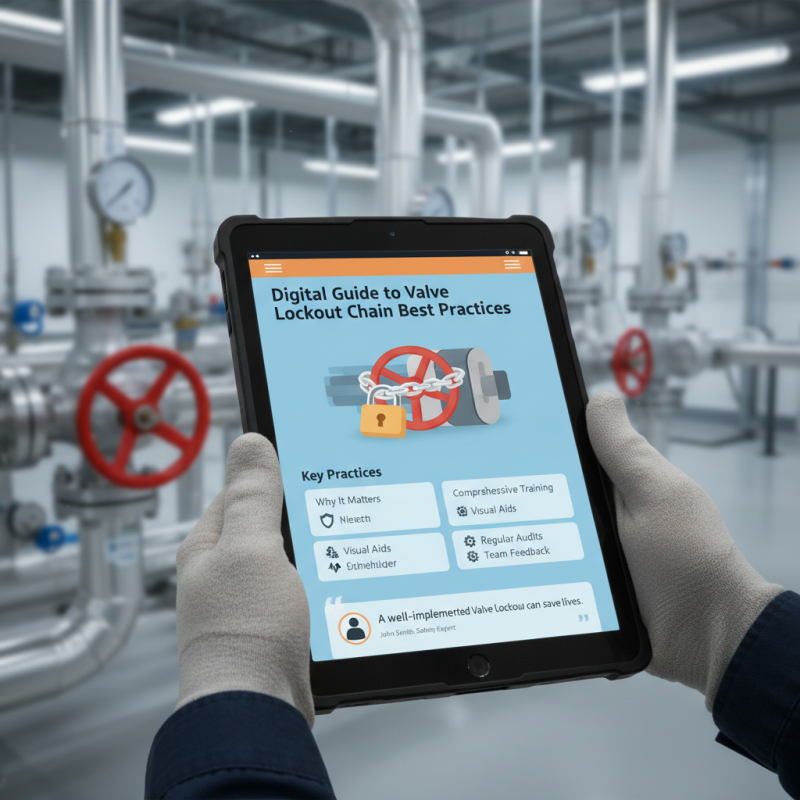

Digital Guide to Valve Lockout Chain Best Practices?

In today's industrial landscape, safety is paramount, especially when dealing with valve operations. As noted by John Smith, a leading expert in workplace safety, “A well-implemented Valve Lockout Chain can save lives.” The importance of adhering to best practices in the use of Valve Lockout Chains cannot be overstated. Many facilities still struggle with inconsistencies in lockout procedures, highlighting a need for improvement.

In an environment where valves control critical operations, the risks of improper locking can lead to catastrophic events. Employees may not fully understand the nuances of using a Valve Lockout Chain. Recognizing this gap points to the necessity of comprehensive training and clear protocols. Visual aids and regular audits are key components in reinforcing these practices.

Moreover, feedback from team members can highlight areas needing refinement. It is crucial to establish a culture of safety and openness, where questions are welcomed. Regular updates to procedures based on real-world experiences can enhance overall effectiveness. This approach can lead to the creation of a more robust safety framework that truly prioritizes the well-being of every worker.

Digital Guide to Valve Lockout Chain Best Practices?

Understanding Valve Lockout Chain: Definition and Importance

Valve lockout chains are essential for ensuring safety during maintenance. These chains prevent accidental valve operation, which can lead to hazardous situations. Proper understanding of lockout chains is crucial for effective implementation.

A valve lockout chain is a physical barrier. It secures valves in the closed position. This is vital in industrial settings. Personnel must always check that chains are properly installed. Over time, they can wear out or become less effective. Regular inspections can help identify such issues.

Here are some tips to enhance lockout chain practices:

  • Always choose high-quality materials when selecting chains. This ensures durability.
  • Visibility is key; use brightly colored chains for easy identification.
  • Training staff on lockout procedures promotes a culture of safety.

Reviewing current lockout protocols can reveal potential gaps. Are all team members informed? Are updates communicated effectively? Reflecting on these questions can improve your safety standards significantly.

Key Components of Effective Valve Lockout Chains in Industry

Effective valve lockout chains are crucial in maintaining safety and preventing accidental valve operation in industrial settings. These chains serve as a physical barrier, ensuring that personnel cannot engage the valve during maintenance or repair work. A key component of a well-functioning valve lockout system is the chain's material; it should be durable and resistant to environmental factors. Many chains are made from coated steel or heavy-duty plastic, which can withstand harsh conditions.

Another important aspect is the lockout device. It should be easy to apply and remove while securely locking the valve in place. Using color-coded chains can aid in quick identification and enhance the visibility of lockout points. Keep in mind that not all chains are created equal—some may not fit all valve types. Regular audits of lockout procedures can highlight issues within the system.

Tips: Ensure staff is trained in proper lockout practices. Conduct drills to reinforce safety habits. Review the system regularly to identify potential improvements or needed updates. Addressing shortcomings can make a significant difference in safety and compliance. Training and clear guidelines are areas that often require ongoing attention.

Digital Guide to Valve Lockout Chain Best Practices

Component Description Material Length Color Code
Lockout Chain Used to secure valves in an off position Steel 10 ft Red
Padlock Provides a strong locking mechanism Aluminum N/A Blue
Warning Tags Alerts personnel of lockout status Plastic 4"x 6" Yellow
Universal Valve Lockouts Fits various valve sizes for lockout Polypropylene Varies Green

Best Practices for Implementing Valve Lockout Chains Safely

Implementing valve lockout chains safely is crucial for workplace safety. These chains serve as a visual and physical barrier. When workers need to perform maintenance, they must securely lock out the valve. This prevents accidental operation that could lead to injuries. It’s essential to ensure all workers are aware of the lockout procedures. Regular training sessions can reinforce these practices.

Proper placement of lockout chains is vital. Chains should be easy to access yet challenging to bypass. Identify all valve locations clearly. Workers often overlook less accessible valves. Mark them with labels or signs. This may seem minor, but it can significantly improve safety compliance.

Regular audits are also important. Evaluate the effectiveness of your lockout processes. Identify common mistakes and address them. Sometimes, training gaps arise. Workers might skip steps due to forgetfulness or lack of awareness. It’s essential to review these practices frequently. A culture of safety must be maintained, and open dialogues can foster better understanding.

Best Practices for Implementing Valve Lockout Chains

Industry Standards and Regulations Governing Valve Lockout Procedures

Lockout procedures for valves are crucial in ensuring workplace safety. Industry standards, such as those from OSHA and ANSI, provide guidelines to minimize risks during maintenance. A report by the National Safety Council highlights that improper lockout/tagout (LOTO) procedures lead to thousands of accidents annually. Complying with these standards is not just a guideline; it's a legal necessity.

Tips: Always check your equipment before locking it out. Ensure all personnel are trained in LOTO procedures.

Implementing valve lockout best practices is vital. The American National Standards Institute (ANSI) emphasizes clearly labeling valves and lockout points. This aids in quick identification during emergency situations. Failure to label can increase response time and risk. A study by the Institute of Safety Professionals indicates proper labeling reduces accidents by over 30%.

Tips: Use a color-coded system for your lockout chains to enhance visibility.

Moreover, regular audits of lockout procedures can identify gaps. These audits should review past incidents to learn what went wrong. A report from the Occupational Safety and Health Administration shows that organizations engaging in routine audits can decrease their incident rates significantly. Ignoring the need for audits can lead to repeated mistakes.

Tips: Schedule audits quarterly to ensure compliance and safety.

Case Studies: Successful Valve Lockout Chain Implementations and Outcomes

In various industries, implementing effective valve lockout chains has proven essential for safety. One case study highlights a manufacturing plant that faced frequent equipment malfunctions. After adopting a valve lockout chain system, they saw a significant reduction in accidents. Employees reported feeling safer, as the system clearly identified which valves were under lockout.

Another project involved a utility company struggling with compliance issues. They integrated a digital valve lockout solution that simplified the process. Operators could now verify lockout status from their mobile devices. This led to improved adherence to safety protocols and reduced downtime. However, some workers found the digital platform initially challenging to navigate. Ongoing training sessions helped address these concerns and fostered a more secure environment.

Despite these successes, implementing valve lockout chains presents hurdles. One facility noted inconsistent use across teams. Some workers overlooked the importance of the lockout process. This created risks that necessitated further reflection on training methods. Continuous improvement in communication can lead to more reliable outcomes in lockout practices.