What Are the Top Types of Stainless Wire Grates?

Stainless Wire Grates serve in kitchens, food-processing areas, storage systems, and industrial equipment. Their open mesh allows air and liquid to pass through, while the stainless-steel construction can resist corrosion when properly selected and maintained. Yet “stainless” does not mean every grate performs the same way. Wire thickness, mesh spacing, welding, edge design, and surface finish all affect strength, cleanability, and fit.

This guide explores the top types of Stainless Wire Grates, from welded and woven designs to expanded-metal and custom configurations. A fine mesh may help support small items, while heavier welded wires can suit demanding loads. Picture a tray holding damp components: its openings, weld quality, and drainage path matter as much as its stated material grade. Details count.

One practical rule captures the selection challenge: “Match the grate’s wire, opening, and finish to its real load and cleaning routine.” No verified source or named industry expert was supplied for that quotation, so it is presented as an editorial takeaway—not a real expert’s statement. That distinction matters. A useful comparison should also acknowledge trade-offs: tighter mesh can collect residue, and a stronger grate may add weight. The sections ahead explain how common designs differ and what to check before choosing one.

What Are the Top Types of Stainless Wire Grates?

How Stainless Steel Wire Grates Are Classified

What Are the Top Types of Stainless Wire Grates?

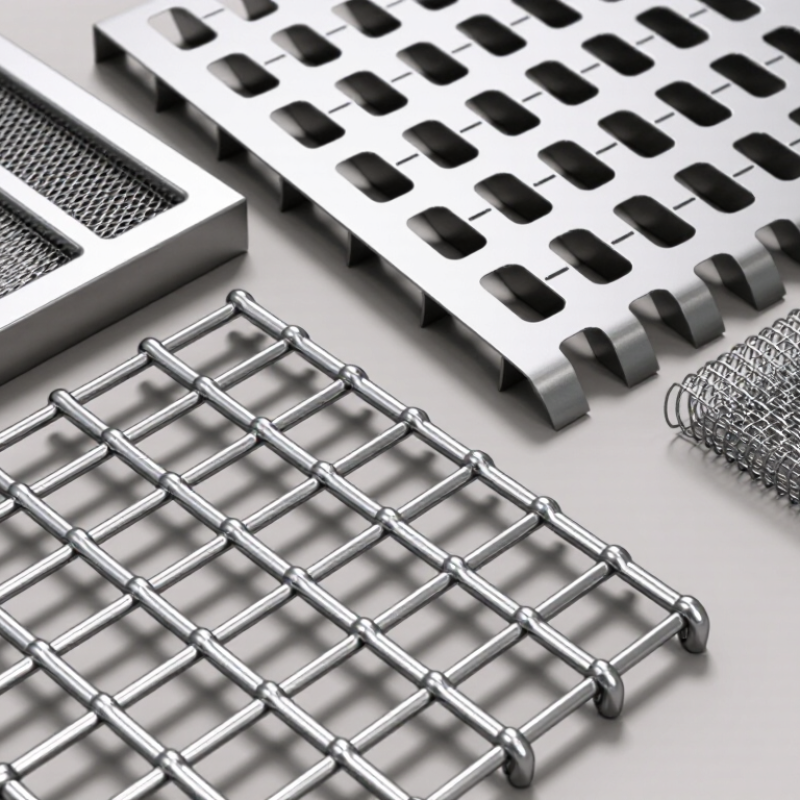
Stainless steel wire grates are commonly classified by how their wires are joined. Welded grates have crossing wires fused at fixed points, creating regular openings. They work well for racks, guards, and platforms that need consistent spacing. Woven grates have interlaced wires and often form a finer, more flexible mesh for screening or drainage. Crimped-wire grates use bends in the wires to keep them positioned, creating a more open panel. Names can vary between suppliers. That matters.

Grates can also be grouped by mesh opening and wire diameter. Smaller openings help catch fine particles, while wider gaps allow more airflow and drainage. A thicker wire may improve rigidity, but construction and support spacing also affect performance. Do not judge load capacity by appearance alone; check the product specifications for the intended use.

Material grade and finish offer another way to classify grates. Grades such as 304 and 316 differ in corrosion resistance, so exposure to salt or cleaning chemicals deserves careful consideration. Finishes may be plain, polished, or treated for easier cleaning. A bright surface can look reassuring, but it does not prove suitability. I would verify the grade, dimensions, and load details before choosing.

What Are the Top Types of Stainless Wire Grates? — How Stainless Steel Wire Grates Are Classified
Type How It Is Made Typical Structure Key Characteristics Common Uses Selection Considerations
Welded Wire Grate Intersecting stainless steel wires are joined by resistance welding at their crossing points. Regular square or rectangular openings; wire spacing and diameter vary by design. Fixed intersections provide a stable, uniform panel. Rigidity depends on wire diameter, spacing, panel size, and support. Machine guards, racks, partitions, baskets, and light-duty platforms. Check the required load, support spacing, opening size, weld quality, and stainless steel grade.
Plain-Weave Wire Grate Each warp wire passes alternately over and under each weft wire. Balanced, regular mesh with generally square openings. Offers a simple, uniform mesh structure and is commonly available in a broad range of wire diameters and openings. Screening, straining, protective panels, and general-purpose baskets. Confirm that the mesh and wire are suitable for the intended load; fine woven mesh is not automatically a walkable grate.
Twill-Weave Wire Grate Each wire passes over and under two wires in succession, creating a diagonal pattern. Closely spaced wires with a visible diagonal weave. Can accommodate finer wires or denser mesh than many plain weaves of comparable wire size. Fine screening, filtration, and applications requiring smaller openings. Evaluate mesh opening, wire diameter, flow requirements, and cleaning needs.
Dutch-Weave Wire Mesh Woven with different wire diameters and spacing in the warp and weft directions. Often has a fine, dense filtration surface and no clearly open square pattern. Designed primarily for particle retention and filtration rather than as a load-bearing walking surface. Liquid or gas filtration and process screening. Specify the filtration requirement, flow direction, pressure conditions, and cleaning method.
Crimped Woven Wire Grate Wires are pre-crimped before weaving so they interlock at their crossings. Regular openings with a corrugated or textured wire profile. The crimped profile helps maintain spacing and can provide a more textured surface than smooth woven mesh. Screening, sorting, guards, and selected shelf or basket applications. Match the opening, wire profile, panel support, and expected impact or abrasion to the application.
Heavy-Duty Welded Bar Grating Load-bearing bars are joined to crossbars, commonly by welding; stainless steel versions are available. Open rectangular panels with wider bearing bars and crossbars. Designed for structural support when properly specified and supported; load capacity depends on bar dimensions, span, and loading. Walkways, platforms, drains, and industrial access areas. Use engineered load tables for the specific panel, span, support arrangement, and applicable safety requirements.
Note: Stainless wire-grate performance varies with alloy grade, wire or bar dimensions, opening size, fabrication, finish, supports, and service conditions. Confirm the material grade and load rating with the project specification or supplier before use.

Welded Wire Grates: Construction and Common Applications

Welded wire grates are made by joining intersecting stainless steel wires at their contact points, usually with resistance welding. The finished panel forms a regular grid with open spaces between wires. Those openings allow water, air, and light to pass through, while the welded joints help keep the pattern stable under everyday use. Wire diameter, spacing, and panel dimensions all affect stiffness and load capacity. Small details matter.

Stainless steel grades and surface finishes should suit the exposure. Damp or washdown areas may need different corrosion resistance and cleaning practices than dry indoor spaces. Welded grates commonly serve as walkway panels, equipment platforms, machine guards, shelving, and drainage covers. In food-processing areas, open construction can make inspection easier, but it does not make a surface automatically sanitary; weld quality, edge condition, and cleaning access still matter. A grate that feels rigid in a short sample may flex across a wider span, so support spacing deserves careful review. That part is easy to miss.

Welded Stainless Wire Grates: Common Grades and Alloy Composition

How to read this: Values are representative midpoints of typical grade composition ranges, shown as weight percentages. Grade 304 is commonly used for general-purpose grates; grade 316 contains molybdenum and is often selected for marine or more corrosive environments. Actual composition and suitability depend on the product specification and service conditions.

Woven Wire Grates: Mesh Patterns and Performance

Woven wire grates use crossing wires to create regular openings, but the pattern changes airflow, drainage, and support. Plain weave is the common choice for balanced, general-purpose screening. Twill weave lets thicker wires form a tighter mesh, though its smaller openings can trap residue. Need more open area? Check the aperture and wire diameter together. For a square mesh with 10 mm openings and 1 mm wires, the standard geometric calculation gives about 82.6% open area. That is an estimate, not a guaranteed operating result. ASTM E2016 describes industrial woven wire cloth dimensions and tolerances, which helps buyers compare specifications consistently.

Performance depends on more than mesh count. A coarse pattern drains quickly, but may allow small parts or debris to pass. A finer pattern improves retention while increasing resistance to flow and making cleaning less convenient. Not always obvious. Check the grate under the actual load, temperature, and washdown conditions; thin wires may flex even when the mesh looks sturdy.

The International Stainless Steel Forum’s Stainless Steel in Figures 2024 reports 58.4 million tonnes of global stainless crude steel production in 2023, reflecting the material’s broad industrial use, not a guarantee of grate performance.

Specify alloy, wire diameter, aperture, and weave separately. I would also verify the finished opening: woven wire can vary slightly across a panel.

Crimped and Expanded-Metal Grates: Structural Differences

Crimped and expanded-metal grates may look similar from a distance, but their load paths differ. Crimped grates use separate stainless wires woven or crossed together, with bends holding each wire in position. Load travels through the wires and their intersections. Under concentrated weight, those intersections can shift or loosen if the mesh is poorly secured. Check the wire diameter, opening size, and edge framing.

Expanded-metal grates start as a single sheet, slit and stretched into diamond-shaped openings. The strands remain connected, so there are no woven crossings to separate. Their stiffness depends on strand width, thickness, and the direction of expansion. That direction matters. A grate can feel firm one way and less rigid across its shorter span. Cut edges may also need attention to prevent sharp contact points.

The material choice has a broad industrial context: Worldstainless’ Stainless Steel in Figures 2024 reports 58.4 million tonnes of global stainless-steel melt-shop production in 2023. That figure describes production, not grate performance. In practice, compare the actual support spacing and expected load before choosing either structure. A fine crimped mesh can catch debris; expanded openings may drain more freely, but can admit larger objects. The trade-off is not always obvious.

How to Choose a Grate for Its Load and Environment

Stainless wire grates come in several forms, including welded grids, woven mesh, and heavier-duty bar-style designs. The right choice depends less on appearance than on what the grate must support. A small service platform carrying people needs a different structure from a shelf holding light containers. Looks can mislead.

Check the expected load, the distance between supports, and how weight will be spread. A grate may handle a steady, evenly distributed load but bend under a person stepping near its center. Ask for load data that matches the actual span and installation, not just the material thickness. I would pause before treating a thicker wire as proof of greater capacity; spacing and support details matter too. Measure twice.

The environment shapes material choice and maintenance. Grade 304 stainless steel often suits many indoor settings, while grade 316 is commonly considered for coastal or chloride-exposed areas. Neither grade is immune to corrosion under every condition. Salt deposits, trapped moisture, cleaning chemicals, and poor drainage can all affect service life. For food-processing or washdown areas, consider whether openings allow debris to collect and whether the surface can be cleaned easily. A grate that performs well on paper may still be awkward to maintain in a cramped installation. Check exposure, cleaning routines, and support conditions before specifying it.