Cosmetic Packaging
Display Packaging
CBD Packaging
Retail Packaging
Product Packaging
Cigarette Packaging
Candle Packaging
Soap Packaging
Chocolate Packaging
Vape Packaging
Food Packaging
Gift Packaging
Bakery Packaging Boxes
Pizza Packaging
Bottle Packaging
Garments Packaging
Custom Printed Bags
Christmas Packaging
Toy Packaging
Cereal Packaging
Jewelry Packaging
Apparel Packaging
Shipping Packaging
Custom Pre Roll Boxes
Dispenser packaging
Eco Friendly Packaging
Custom Health Packaging
Pharmaceutical PackagingChoosing a reliable Steel Wire Rod Manufacturer requires more than comparing prices on a supplier list. Global buyers must examine production experience, technical capacity, quality systems, and delivery performance. Wire rod may arrive in compact coils, but small differences in diameter, chemistry, or surface condition can affect drawing, welding, and downstream forming. Details matter.
This guide introduces leading manufacturers serving international markets. It considers carbon steel, alloy steel, stainless steel, and specialty wire rod applications. Buyers should review mill certificates, heat numbers, tensile data, dimensional tolerances, and inspection records before placing large orders. Standards such as ASTM, EN, and JIS can support comparison, but certification alone does not guarantee consistent results. Factory audits, sample testing, and direct communication remain valuable.
Practical sourcing also involves coil weight, packaging strength, port access, production schedules, and customs documentation. A competitive quotation may become expensive when delays, damaged coils, or unclear specifications appear later. Reliable manufacturers usually explain these risks clearly and provide traceable records. Their technical teams should answer questions with measured data, not vague promises.
No supplier is perfect. Even experienced mills may face maintenance delays or material variations. That reality deserves honest evaluation. Buyers should compare verified capabilities, not polished websites. The right partner combines stable metallurgy, responsive service, transparent documentation, and realistic lead times. This overview aims to help procurement teams make informed decisions while identifying questions that still require independent verification.
Global Steel Wire Rod Manufacturing: Industry Scope and Product Definition
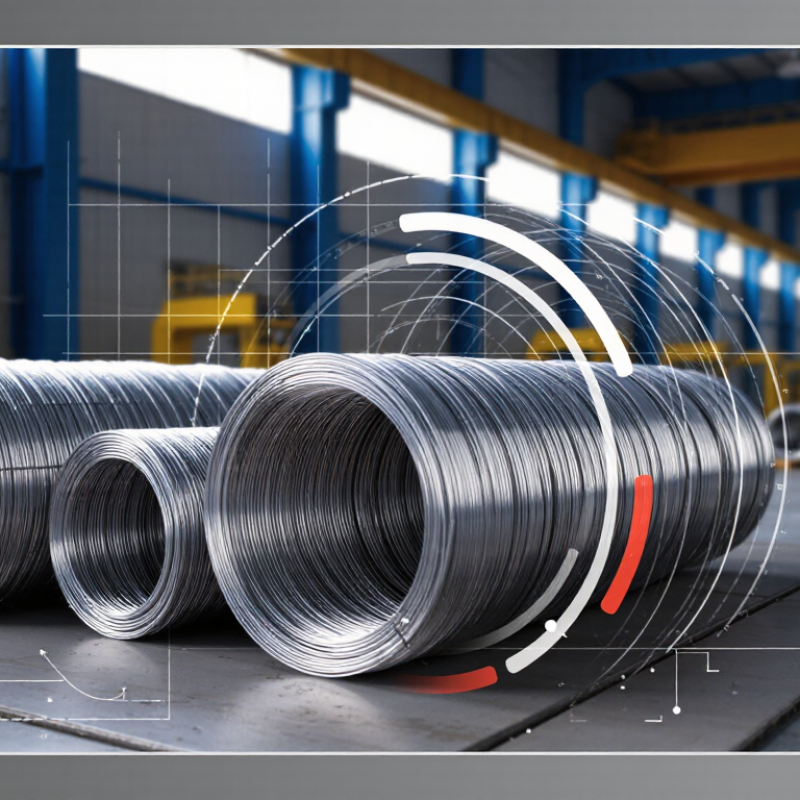
Steel wire rod is a hot-rolled, semi-finished steel product supplied in coils. It commonly supports wire drawing, fasteners, welding wire, mesh, springs, and cable production. Its circular section and controlled surface condition make it suitable for further processing. Diameters often range from roughly 5.5 to 16 millimeters, although mills produce wider specifications for specialized applications.
The global manufacturing scope includes carbon steel, alloy steel, stainless steel, and low-carbon grades. Manufacturers manage billet chemistry, reheating temperature, rolling speed, cooling, and coiling. These stages influence tensile strength, ductility, scale formation, and drawing performance. During plant assessments, buyers should review heat tracking, calibration records, dimensional checks, and test certificates. Small inconsistencies can become costly during high-speed drawing.
Quality is not defined by chemistry alone. Buyers should confirm applicable standards, coil weight, packaging, surface requirements, and delivery tolerances. Mechanical tests may include tensile strength, elongation, and torsion performance. Chemical analysis should match the ordered grade and production heat. In practice, specifications are sometimes written too broadly. That creates avoidable disputes. A clearer purchase document should state end use, processing route, inspection method, and acceptance limits. Mill capacity matters, but process discipline matters more.
Selecting a wire rod manufacturer requires more than comparing prices. World Steel Association data recorded about 1.89 billion tonnes of crude steel production in 2023. Such scale makes consistent quality difficult, especially across different heats and production lines. Buyers should request certificates showing chemical composition, tensile strength, yield behavior, diameter tolerance, ovality, and surface condition. These records must identify the heat number and production date.
Recognized specifications provide a practical baseline. ISO 16120 covers non-alloy steel wire rod for wire conversion, while ASTM A510/A510M defines requirements for carbon steel wire rod and coarse round wire. EN 10016 also addresses technical delivery conditions for non-alloy steel wire rod. A capable manufacturer should explain which standard applies and where its internal limits are stricter. Ask for decarburization results, inclusion ratings, coil weight, and sampling methods. Small surface seams can become serious breaks during drawing.
Traceability deserves equal attention. The International Energy Agency estimates that steel production creates roughly 7–9% of global energy-related emissions. Reliable suppliers should provide production records, inspection evidence, and measurable emissions data, not broad sustainability claims. Independent testing can verify disputed results. It costs more, but failed drawing runs cost more.
A certificate is not proof of perfection.
Experienced buyers also inspect packaging, rust protection, loading photos, and complaint procedures. No checklist catches every defect. The specification itself may need revision after real processing trials.
Global wire rod supply follows the geography of steelmaking. The World Steel Association reports that Asia produced roughly 73% of global crude steel in 2023. This concentration supports large rolling complexes, deep port networks, and frequent export shipments. European suppliers remain important for engineered grades, especially low-carbon, high-carbon, and alloy wire rod. North American mills often serve construction, automotive, and industrial buyers through regional distribution networks.
Capacity alone does not prove supply reliability. It can mislead.
The OECD estimates global steelmaking capacity exceeded 2.5 billion tonnes in 2024, while demand growth remained uneven. Buyers should examine rolling mill size, furnace flexibility, billet availability, and monthly output records. A capable producer may offer diameters near 5.5 to 16 millimetres, controlled surface quality, and coil weights above two tonnes. Some facilities also provide spheroidized or patenting-ready grades for demanding wire applications. Quality checks should reference standards such as ISO 16120, ASTM A510, or applicable regional specifications. Ask for heat certificates, tensile results, chemical analysis, and traceability from billet to coil. These details expose weaknesses faster than attractive brochures. Freight distance still matters. A lower mill price can disappear after port handling, inland transport, and storage charges. My practical concern is simple: public capacity figures rarely reveal actual free capacity. Production data deserves independent verification.
| Leading Region | Major Production Markets | Typical Product Range | Key Production Capabilities | Common End-Use Grades | Relevant Standards | Global Buyer Considerations |
|---|---|---|---|---|---|---|
| East Asia | China, Japan, South Korea and Taiwan | Generally 5.5–25 mm; specialty mills may offer larger diameters | High-volume hot rolling; controlled cooling; low-, medium- and high-carbon grades; alloy rod; quality rod for fasteners, bearings, tire cord and welding wire | Low-carbon drawing rod, high-carbon steel, spring steel, bearing steel, welding-wire rod and tire-cord grades | JIS G3505, JIS G3506, ISO 16120, ASTM A510/A510M and customer specifications | Broadest product selection and strong export infrastructure; confirm chemistry, surface quality, coil weight and traceability |
| South Asia | India, Pakistan and Bangladesh | Commonly 5.5–16 mm, with selected mills producing larger sizes | Integrated and electric-furnace production; merchant-grade rod; construction, mesh, nail and general drawing applications | Low-carbon drawing quality, mesh-grade rod, nail rod, prestressing-related feedstock and medium-carbon grades | IS 7904, ISO 16120, ASTM A510/A510M and buyer-approved specifications | Competitive supply for Asia, Africa and the Middle East; check consistency between heats and certificate documentation |
| Southeast Asia | Vietnam, Indonesia, Malaysia, Thailand and the Philippines | Typically 5.5–16 mm; selected facilities offer 20–25 mm products | Construction and general-purpose rod; increasing capability in high-carbon, mesh, nail and cold-heading applications | Low-carbon drawing rod, concrete mesh rod, nail rod, cold-heading feedstock and medium-carbon rod | ASTM A510/A510M, ISO 16120, JIS G3505 and regional standards | Strong access to ASEAN shipping routes; verify export certificates, coil protection and availability of specialty grades |
| Europe | Germany, Italy, Spain, France, Poland, Türkiye and the Nordic region | Generally 5.5–25 mm; specialty and engineering grades may use customized dimensions | High-quality controlled rolling; engineering steel; cold-heading, bearing, spring, tire-cord and welding-wire feedstock | Low- and high-carbon rod, alloy rod, stainless rod, free-cutting steel and cold-heading quality | EN 10016 series, EN 10263, ISO 16120, ASTM A510/A510M and customer standards | Strong quality systems and traceability; buyers should assess carbon-border requirements, energy data and regional trade measures |
| North America | United States, Canada and Mexico | Commonly 5.5–25 mm, depending on mill and grade | Electric-arc-furnace and integrated production; merchant rod; high-carbon, cold-heading, welding, tire and structural applications | Low-carbon drawing rod, high-carbon rod, cold-heading quality, spring steel, welding-wire rod and alloy rod | ASTM A510/A510M, ASTM A704/A704M, SAE specifications and ISO 16120 | Reliable regional supply and detailed mill certification; review domestic-content rules, tariff treatment and minimum order quantities |
| CIS and Eastern Europe | Russia, Ukraine, Kazakhstan and neighboring markets | Usually 5.5–25 mm for commercial and engineering grades | Large-scale basic oxygen and electric-furnace production; carbon, alloy, spring and bearing steel capabilities | Construction rod, high-carbon rod, spring steel, bearing steel and general drawing quality | GOST specifications, ISO 16120, EN 10016 and ASTM requirements where applicable | Evaluate sanctions, payment channels, insurance, route availability and documentation before contracting |
| Middle East and North Africa | Türkiye, Saudi Arabia, the United Arab Emirates, Egypt, Iran and North African markets | Typically 5.5–16 mm; larger diameters available from selected producers | Construction-focused rod; expanding merchant, mesh, nail and general drawing production | Low-carbon rod, mesh rod, nail rod, medium-carbon rod and selected high-carbon grades | EN 10016, ASTM A510/A510M, ISO 16120 and national construction standards | Strategic location for Mediterranean, Gulf and African buyers; confirm port capacity, heat certificates and seasonal logistics |
| Latin America | Brazil, Mexico, Argentina, Colombia and Chile | Generally 5.5–16 mm; selected mills supply larger and alloy grades | Integrated and electric-furnace production; construction, mesh, nail, drawing and selected engineering applications | Low-carbon drawing rod, mesh rod, nail rod, medium-carbon rod and selected high-carbon products | ABNT standards, ASTM A510/A510M, ISO 16120 and customer specifications | Competitive for the Americas; compare inland freight, port distance, import duties and regional certification requirements |

International buyers should assess wire rod beyond the quoted price. Start with grade, carbon content, diameter tolerance, and surface condition. These details affect drawing performance, welding quality, and production waste. A reliable supplier should provide recent mill test certificates for each shipment. The certificates should match the heat number marked on the coil. Small details matter.
Production consistency is equally important. Review tensile strength, yield strength, elongation, and decarburization control. Ask how samples are collected and which laboratory performs the tests. Factory audits can reveal cooling practices, furnace controls, and storage conditions. I have seen attractive offers lose value through unstable dimensions and repeated line stoppages. A checklist helps, but it cannot replace technical judgment.
International logistics require separate attention. Compare coil weights, packing materials, loading methods, port access, and delivery schedules. Confirm whether the supplier can maintain traceability after transshipment. Packaging should protect the rod from moisture, salt air, and handling damage. Documents can mislead. Check certificates, inspection reports, and export records against the actual contract. Buyers should also examine communication speed and corrective-action procedures. No supplier performs perfectly, and serious buyers should record weaknesses instead of ignoring them. That reflection often prevents a costly repeat order.
Global buyers should assess wire rod suppliers through supply-chain resilience, not production volume alone. The World Steel Association reported 1,888.2 million tonnes of crude steel production in 2023 . That scale creates choice, but also hides differences in billet quality, rolling consistency, and export reliability.
Ask for heat certificates, mechanical test results, and recent shipment records. Small details matter. A supplier near a deep-water port may reduce inland handling and shorten delivery time. However, port congestion, energy shortages, and seasonal rail limits can still disrupt schedules.
Pricing requires more than comparing dollars per tonne. Iron ore, scrap, electricity, alloy additions, freight, insurance, and currency movements all affect the final landed cost.
The World Bank’s Commodity Markets Outlook has repeatedly linked metal prices with Chinese construction demand and broader industrial growth. UN Comtrade data can help buyers compare import values under HS code 7213, but averages may mix different grades and delivery terms. That comparison can mislead.
Use a landed-cost model with Incoterms, payment fees, duties, and demurrage. Freight changes everything. Regional trade measures also deserve careful review, including quotas, safeguard duties, and technical standards.
A low mill quote may still be the wrong decision. Buyers should test several scenarios, because forecasts remain imperfect and supply chains rarely behave neatly.
© 2007 - 2025 The Custom Packaging. All right reserved.