Cosmetic Packaging
Display Packaging
CBD Packaging
Retail Packaging
Product Packaging
Cigarette Packaging
Candle Packaging
Soap Packaging
Chocolate Packaging
Vape Packaging
Food Packaging
Gift Packaging
Bakery Packaging Boxes
Pizza Packaging
Bottle Packaging
Garments Packaging
Custom Printed Bags
Christmas Packaging
Toy Packaging
Cereal Packaging
Jewelry Packaging
Apparel Packaging
Shipping Packaging
Custom Pre Roll Boxes
Dispenser packaging
Eco Friendly Packaging
Custom Health Packaging
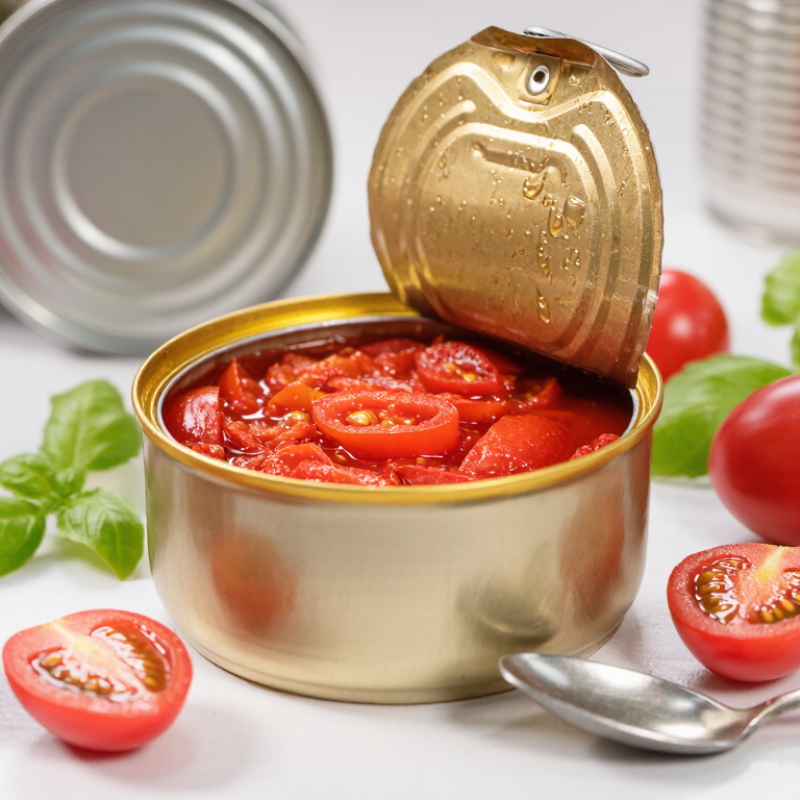
Pharmaceutical PackagingChoosing a dependable supplier is about more than finding bright red tomatoes in a can. Buyers need consistent texture, clear ingredient information, reliable packing, and samples that match production shipments. For Canned Tomato Crushed, small differences matter. A spoonful should show ripe tomato pieces, even color, and a clean aroma—not excess watery liquid or an unexpectedly sharp taste.
Maya Chen, a fictional sourcing specialist created for this guide, offers this practical reminder: “A good supplier proves consistency in the can, not just in the catalog.” Treat that as a sourcing principle, not a verified industry quotation. Ask prospective suppliers about tomato variety, processing methods, packaging sizes, quality checks, and export experience. Request product specifications and recent samples. Then compare what arrives with the claims on paper. Details count.
China has a wide range of canned food manufacturers, but supplier fit depends on your market, order volume, and quality expectations. Some buyers prioritize flexible packaging; others need stable specifications across repeated orders. Check communication, lead times, production capacity, and whether documentation is complete and easy to review. A low price can look attractive. It may not tell the whole story.
This guide introduces Chinese suppliers of canned crushed tomatoes and practical points for evaluating them. It also recognizes a common sourcing challenge: public information can be incomplete, and supplier claims still need verification. Use the comparisons as a starting point, then confirm details directly before placing an order. Small checks now can prevent costly surprises later.
Crushed tomatoes are chopped tomato flesh packed in juice or purée. Buyers often use 4.5–6.5°Brix as a practical specification range, not a universal legal definition. Brix estimates soluble solids; it does not measure sweetness alone. A reading near 4.5 may produce a lighter, looser sauce, while 6.5 can give more body. Not quite a recipe guarantee. Variety, ripeness, screening, and added juice all affect the result. Ask suppliers whether the figure is measured on the packed product or drained tomatoes, and whether salt or other ingredients are included.
The FAO/WHO Codex standard CXS 57-1981 sets a minimum of 7% soluble solids for tomato concentrate, excluding salt. That benchmark applies to concentrate, not crushed tomatoes, but it helps buyers distinguish products by processing strength. USDA Agricultural Marketing Service standards for canned tomatoes assess factors such as drained weight, color, and defects; Brix alone cannot establish quality. Request a current specification sheet and batch certificate, then check a sample with a calibrated refractometer. Check it cold. Results can shift with temperature and sample preparation, so agree on the testing method before comparing offers. A tidy number can still hide uneven pieces or excess thin juice.
China’s canned crushed tomato suppliers are closely tied to the country’s tomato-growing regions. In Xinjiang and parts of northwestern China, dry conditions and long summer days support large-scale processing. Many factories are located near farms, helping reduce the time between harvest and cooking. That matters: ripe tomatoes can lose quality during long transport. Processing is seasonal, and production schedules may shift with weather and crop yields.
Factory scale varies widely. Some plants handle high-volume harvests with automated washing, sorting, crushing, and filling lines. Others operate on a smaller scale or focus on specific pack sizes. Buyers can ask about annual capacity, peak-season output, and how each batch is checked. A useful factory review includes a site visit or independent audit, plus samples tested for texture, color, acidity, and consistency. Paperwork alone is not enough. Even a capable plant can have uneven results between seasons.
Export routes depend on both factory location and destination. Inland processors may move finished cans by rail or truck to coastal ports, while export-oriented facilities often coordinate packing and shipping schedules directly. Common buyer markets include Asia, the Middle East, Africa, and Europe, though product specifications differ. Confirm can dimensions, ingredient details, shelf-life data, and shipping terms before placing a large order. The supplier landscape is not always neat; a low quoted price may reflect packaging, freight, or quality differences that deserve closer checking.
Supplier landscape overview by region and industry role. This table describes regional capabilities, not individual companies; factory capacity and product availability vary by facility.
| Region / Hub | Role in the Tomato Supply Chain | Typical Factory-Scale Profile | Fit for Canned Crushed Tomatoes | Export and Buyer Considerations |
|---|---|---|---|---|
| Xinjiang | A major tomato-growing and tomato-processing region, particularly known for processing tomatoes into paste and other tomato products. | Large-scale, seasonally supplied processing operations are an important part of the regional tomato industry. Confirm whether a facility also operates a dedicated canning line. | Potentially suitable where a processor offers canned products in addition to bulk tomato ingredients; verify cut size, solids, and packing format. | The region is inland, so assess transport time and cost to the selected export port, along with seasonal production and shipment planning. |
| Inner Mongolia | Part of northern China’s tomato-growing and processing belt, with agricultural processing activity linked to regional harvests. | Capacity and product mix differ by site; distinguish dedicated canning capacity from facilities focused on paste or other processed tomato products. | A possible sourcing area when suppliers can document canned crushed or diced tomato production and provide samples matching the buyer’s specification. | Request the production calendar, finished-goods lead time, and a route-specific freight quotation before comparing offers. |
| Shandong and other eastern coastal manufacturing areas | Coastal food-manufacturing and logistics locations can support packaging, processing, and access to export infrastructure; they are not necessarily primary tomato-growing hubs. | Factory scale ranges from specialist canners to larger food-processing operations. Evaluate the actual line, annual output, and production schedule rather than relying on regional assumptions. | May suit buyers prioritizing canned retail formats, customized packaging, or port access, subject to confirmation of tomato sourcing and processing capability. | Compare port distance, container availability, packaging specifications, and export-document experience for the destination market. |
| Other coastal and inland food-processing clusters | Food processors outside the main growing regions may source tomatoes or semi-finished ingredients from other provinces. | Scale is facility-specific; an exporter or trading office should not be treated as proof of in-house manufacturing capacity. | Potentially suitable for private-label or food-service orders when the supplier can demonstrate traceability and control over the production site. | Confirm the legal manufacturer, production address, product specification, and whether the exporter is the factory or a trading intermediary. |
| Export-market and classification check | Prepared or preserved tomatoes are generally classified in HS heading 2002. Whole or pieces and other preparations may fall under different subheadings. | There is no single standard factory scale for export-ready crushed tomatoes; confirm the supplier’s verified output for the exact product and pack. | Specify tomato variety or ingredient basis, crushed-piece dimensions, drained weight or net weight, salt or additives, Brix where relevant, and container type. | Potential destination regions include Asia, the Middle East, Africa, Europe, and the Americas. Check current customs data and destination-country rules for the exact product and HS code; classification can depend on product preparation. |

Buyer due diligence: request a current product specification, food-safety and facility certificates, production-site details, recent third-party test results, packaging photos, and destination-specific export documents. Verify all claims directly with the manufacturing facility.
A production review should begin with the fruit, not the label. FAOSTAT recorded more than 186 million tonnes of tomatoes produced worldwide in 2022; that broad figure does not reveal how much was suitable for canning. Buyers should request the harvest origin, maturity criteria, and incoming inspection records.
In a sample check, crushed tomatoes should show an even red color, recognizable pieces, and no sour or metallic odor. Measure soluble solids and pH against the agreed product specification rather than assuming one universal target.
Small differences matter.
For a 400 g can, verify declared net content, actual fill weight, headspace, and can-seam integrity across multiple samples. Ask whether the internal coating is suitable for acidic tomato products, and review the supplier’s migration and packaging quality documentation.
Codex Alimentarius CXS 57-1981 provides a reference for canned tomato quality, but buyers should confirm that its scope fits the precise product form.
Check the seam. A neat label cannot prove a sound seal.
Traceability should connect each finished-can lot to its raw-material intake, processing date, production line, and packaging batch. Request a recent mock recall or lot-tracing exercise, plus records for foreign-material controls and routine quality checks.
Compare certificates with the actual lot code on the can. Records can look complete yet still leave gaps between harvest and packing; ask who closes those gaps, and how quickly.
For buyers sourcing canned crushed tomatoes from China, supplier checks should begin with evidence, not polished sales language. Ask for current food-safety certificates, their scope, issuing body, site address, and expiry date. A certificate should cover the factory and activities involved; a trading-office document may not. Verify it with the issuer where possible. Small detail, big difference.
An audit adds context. Request a recent third-party audit report or arrange an independent visit, then review corrective actions, not just the score. Check raw tomato intake, washing, sorting, filling, retort records, can-seam checks, pest control, and staff hygiene. Ask how the supplier handles a failed temperature record or damaged cans. The answer should be specific and supported by dated records. Records matter. A spotless tour is not enough.
Lab testing should match product risks and destination-market requirements. Review specifications and recent results for pH, Brix, net weight, microbiological indicators, and relevant contaminants. Confirm test methods, sampling dates, and laboratory accreditation. Agree on retain samples and lot traceability linking cans to production records. Results can vary between lots, and one report cannot guarantee every future batch. I would still recheck documents after a factory change; buyers can overlook that detail.
For China sourcing, compare MOQ by shipment basis, not just cartons. Many factories quote a trial order by pallet, while export orders may start at one 20-foot container; confirm this directly, since product size and packing lines change the threshold.
A 24-can carton is common for retail-size cans, but can weight, carton strength, and pallet pattern vary.
Ask for a packing list showing cans per carton, cartons per pallet, and total container load.
Small details matter.
FAOSTAT reports roughly 186 million tonnes of global tomato production in 2022, but that includes fresh-market tomatoes and does not establish canned-product prices.
For a fair cost comparison, request matching specifications: net weight, tomato solids, ingredients, can type, and FOB port.
UN Comtrade export data under HS 200290 can help check trade values, but broad customs categories are not direct quotes for crushed tomatoes.
Compare landed cost too: freight, insurance, inspection, and any applicable duties can outweigh a small unit-price gap.
Ask suppliers to state lead time separately for production and port delivery; seasonal raw-material availability can shift schedules.
One weak spot: buyers often compare carton prices before confirming net weight. That makes the spreadsheet look precise, but not useful.
© 2007 - 2025 The Custom Packaging. All right reserved.