7 Tips for Choosing Eco Friendly Cosmetic Containers Wholesale

Choosing Eco Friendly Cosmetic Containers Wholesale is not just a materials decision. It affects product protection, shipping weight, customer use, and what happens after the last drop. The OECD’s Global Plastics Outlook reports that packaging generated 40% of global plastic waste in 2019. That figure covers all packaging, not cosmetics alone, but it shows why container choices deserve careful scrutiny. Small details matter. A pump that cannot be separated, a jar that is too heavy to ship, or a refill pouch customers never reuse can weaken an otherwise thoughtful design.

This guide offers seven practical checks for comparing wholesale options, from recycled-content claims to closure compatibility and supplier documentation. The United Nations Environment Programme’s 2023 report, Turning off the Tap, estimates that systemic changes could cut plastic pollution by 80% by 2040. That is a global scenario, not a guarantee for any single brand. Still, it points toward useful questions: Can the container be reused or recycled in the markets where it is sold? Does the formula work with the material? Can the supplier verify recycled content? Glass, aluminum, and post-consumer recycled plastic each have trade-offs in weight, durability, and local collection. A green label alone proves little. Ask for evidence, test filled samples, and check the full pack—including cap, pump, and liner—before placing a wholesale order.

7 Tips for Choosing Eco Friendly Cosmetic Containers Wholesale

Define Eco-Friendly Criteria: OECD Found Only 9% of Plastic Waste Was Recycled

When choosing cosmetic containers wholesale, define “eco-friendly” with measurable criteria, not green-looking labels. The OECD’s Global Plastics Outlook reports that only 9% of plastic waste was recycled worldwide in 2019. That gap matters. A container may be recyclable in theory but rarely accepted by local collection systems. Check the resin type, recycled content, material weight, and whether pumps, caps, or liners can be separated. Ask suppliers for test reports and written specifications. A neat product sheet is not proof of a workable recycling route.

Compare options using lifecycle details, not material names alone. UNEP’s 2023 report, Turning off the Tap, says packaging accounts for about 36% of global plastic production. For a wholesale order, request the exact percentage of post-consumer recycled content and confirm whether that claim applies to every component. Refill formats can reduce packaging, but only when customers can reuse them safely and conveniently. Glass may feel premium, yet its weight increases shipping impacts; lighter plastic may be easier to transport but harder to recycle when mixed with other materials. There is no perfect container. Test samples, inspect closures and labels, and verify local disposal guidance before placing a large order.

Compare Container Materials Against OECD’s 460 Mt Global Plastics Production Figure

OECD reported about 460 million tonnes of global plastics production in 2019. That figure describes all plastics, not cosmetic packaging alone, but it shows the scale behind material choices. For wholesale buyers, compare containers by weight, recycled content, durability, and local recovery options. A recyclable label is not enough. Check whether nearby facilities actually accept the material and format.

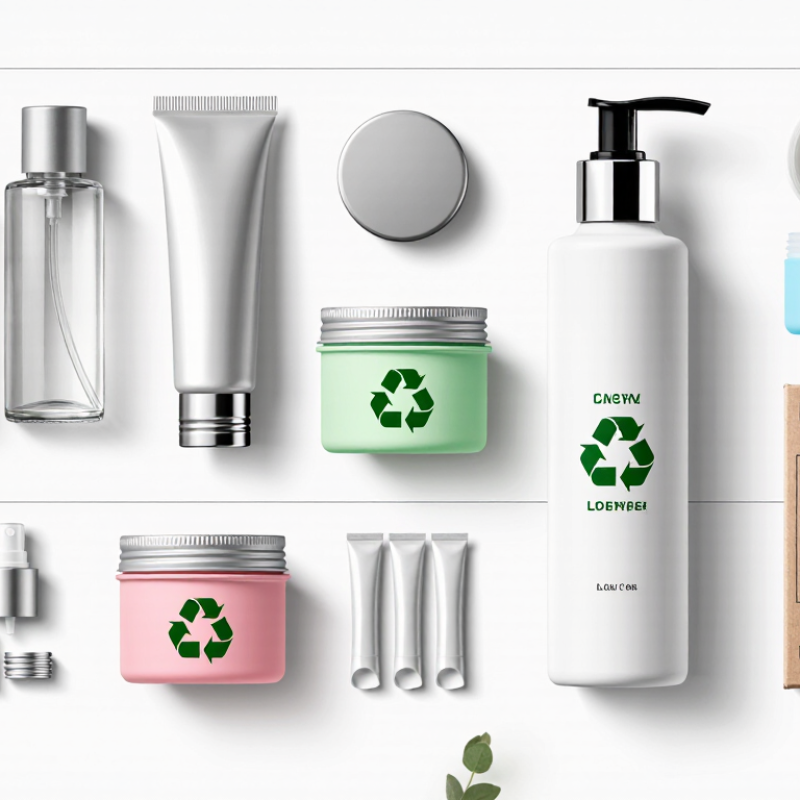
Tip: Compare like with like. A glass jar feels substantial and resists product interaction, yet it weighs more during shipping and can break. Aluminum is light and shields contents from light, but liners and closures affect recyclability. Recycled PET can reduce demand for new plastic, though color, resin quality, and local sorting rules matter. Ask suppliers for material specifications and sample containers. Test them with your formula.

Tip: Review the whole package. Pumps, droppers, labels, and mixed-material caps can complicate sorting. Refill systems may cut packaging use, but only when customers reuse them. Not always simple. Request evidence for recycled-content claims, then compare the delivered unit weight across options. Small details count. I would not choose a container from a material name alone; transport distance, damage rates, and real disposal access can change the result.

Check Recycled Content: EU Sets a 35% Target for Other Plastic Packaging by 2030

When sourcing eco-friendly cosmetic containers wholesale, recycled content deserves a close check. Regulation (EU) 2025/40 sets a 2030 target of 35% recycled plastic for “other plastic packaging” placed on the EU market. Some cosmetic containers may fit this category, but classification depends on the packaging type. Ask suppliers how they classify each bottle, jar, cap, and pump.

Request documentation showing the post-consumer recycled (PCR) content, resin type, and calculation method. Batch-specific records are more useful than a broad sustainability claim. OECD’s Global Plastics Outlook (2022) estimated that only 9% of global plastic waste was recycled in 2019. That gap makes traceable material data important. Still, a neat percentage is not the whole story. Recycled resin can vary in color, odor, and consistency, so check samples under real filling and storage conditions.

Compare the stated content with the finished container, not just the resin supplier’s specification. Ask whether pumps, liners, labels, or decorative coatings affect the figure. Get the answer in writing. A small detail can change the calculation. And a higher PCR share may require practical trade-offs, such as a less uniform shade or added testing. Don’t assume every component is included.

7 Tips for Choosing Eco Friendly Cosmetic Containers Wholesale - Check Recycled Content: EU Sets a 35% Target for Other Plastic Packaging by 2030

Tip What to assess Useful data to record Evidence or question for the wholesaler
1. Check recycled content Identify the plastic type and whether the recycled material is post-consumer or post-industrial. Confirm which packaging category applies before comparing a container with an EU target. Recycled-content percentage by component; material type; component weight. Request a written recycled-content declaration and supporting documentation. Under the EU Packaging and Packaging Waste Regulation (PPWR), the 2030 target for “other plastic packaging” is 35% recycled plastic. It is a category-based target, so do not assume it applies to every cosmetic container.
2. Verify the full material breakdown Check the body, cap, pump, liner, label, and decoration separately. Mixed materials and small components can affect sorting and recycling. Material and weight for each component; whether parts can be separated. Ask for a component-level specification, including any metal springs, multilayer parts, coatings, or bonded labels.
3. Check recyclability in your sales markets Assess whether the complete pack can be collected, sorted, and recycled in the markets where it will be sold. Recyclability depends on local systems and packaging design. Material combination; label and decoration details; separation instructions. Request market-specific recyclability guidance or test results. Avoid treating a single-material body as proof that the entire pack is recyclable.
4. Compare packaging weight Compare containers of the same capacity and function. A lighter pack may use less material, provided it still protects the product and performs reliably. Empty-pack weight in grams; usable capacity in millilitres; weight per millilitre. Ask for dimensional drawings and confirmed weights, and compare like-for-like formats rather than different container types.
5. Test product compatibility Check that the container and closure suit the formula, dispensing method, and expected storage and transport conditions. Leakage, dispensing, appearance, and compatibility results from agreed tests. Request samples and agree on testing with your product before placing a bulk order. Performance requirements vary by formula and pack design.
6. Review order and delivery terms Confirm that minimum order quantities, production timing, and shipping terms fit your forecast and storage capacity. Quoted minimum order quantity; quoted lead time; units per carton; delivery terms. Request current written quotations. These terms vary by supplier, specification, order size, and destination.
7. Confirm consistency and documentation Check how the wholesaler manages specification changes and batch-to-batch consistency, especially for recycled-content materials. Specification revision; batch identification; quality checks; available compliance documents. Ask how changes are communicated and what documents are supplied with orders. Keep approved samples and specifications for comparison.

Note: The 35% figure refers to the PPWR target for “other plastic packaging” by 2030; the applicable category and calculation depend on the packaging and the regulation’s rules. Confirm current requirements for the specific product and market before making a compliance claim.

Evaluate Refill Options: UNEP Says Reuse Could Cut Plastic Pollution by 30% by 2040

When comparing eco-friendly cosmetic containers wholesale, look beyond the recycled-content label. Ask whether customers can refill the container easily and whether its pump, cap, and opening can withstand repeated use. UNEP estimates that reuse could reduce plastic pollution by 30% by 2040, but that potential depends on systems people actually use. A refill pouch is not useful if it leaks in a handbag or takes too long to pour.

Check practical details with samples. Fill a jar with a thick cream, then test how much product remains around its corners. Try the closure with wet hands. Can staff clean and refill the package without special tools? Small design flaws matter. Durability matters too: a container that cracks after a few cycles may create more waste, not less. Ask suppliers for material and reuse-cycle information, and verify claims rather than relying on vague terms like “green.”

Consider the whole refill journey before placing a large order. Will customers refill at home, return containers, or use a store station? Each option needs clear instructions, reliable cleaning procedures, and convenient access. There is no perfect container. A lightweight package may be easier to ship, while a sturdier one may survive more refills. Test both with real users and record where they hesitate. That feedback can be uncomfortable, but it is useful.

Verify Wholesale Suppliers’ Material, Safety, and Environmental Claims Before Ordering

Before placing a wholesale order, ask suppliers to identify each container’s material and provide evidence for recycled-content claims. Request technical data sheets, safety documentation, and test results for the finished package. Check that caps, liners, pumps, and bottles are all covered. A resin name alone tells you little about the full container.

The OECD’s Global Plastics Outlook (2022) estimates that 353 million tonnes of plastic waste were generated worldwide in 2019. Packaging made up 40% of that waste, while only 9% of plastic waste was ultimately recycled. These figures make environmental claims worth checking closely.

Ask what the claim covers: the bottle, the closure, or the entire pack? Request documentation showing recycled content and any composting conditions. A logo is not proof.

For safety, check compatibility test results using your intended formula, including leakage and changes in color or odor. Review samples from more than one production batch, if possible. One sample can miss variation. I would not treat a supplier’s confident reply as enough; paperwork and physical checks should agree.