Industrial Vision Inspection Trends at 2026 Canton Fair?
As the 2026 Canton Fair approaches, the spotlight is on advancements in Industrial Vision Inspection. This year’s event showcases innovations that enhance quality control and efficiency in manufacturing. With the integration of AI-driven technologies, exhibitors are setting new standards in inspection processes.
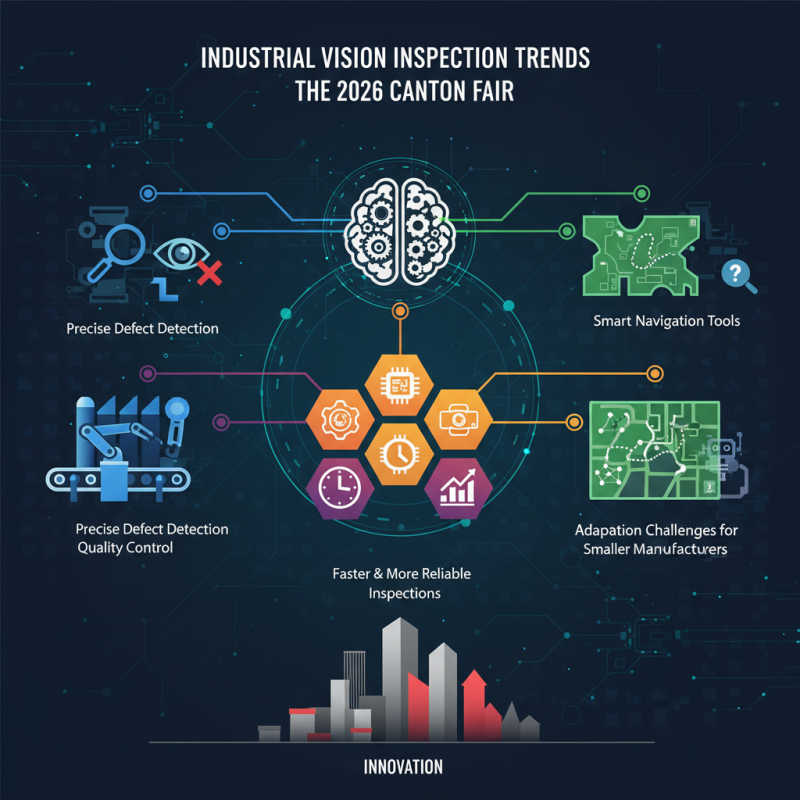
During the fair, attendees can expect to see cutting-edge solutions designed for various industries. The focus will be on machine vision systems that offer precise defect detection. In addition, various suppliers will display products that utilize AI for faster and more reliable inspections. However, challenges remain, especially in the adaptation of these technologies by smaller manufacturers.
Navigating through the 155,000 square meters of exhibition space might be daunting. The introduction of smart navigation tools can ease this difficulty. Still, some visitors might find it overwhelming to utilize the AI features effectively. The push for innovation in Industrial Vision Inspection at this year’s fair is remarkable, yet it is essential to consider the hurdles businesses face in implementation and acceptance.
Industrial Vision Inspection Overview and Its Significance in Manufacturing
Industrial vision inspection plays a crucial role in modern manufacturing. It enhances the efficiency and accuracy of production processes. With the development of advanced camera technology and machine learning, businesses can identify defects in real-time, leading to reduced waste and improved product quality.
In recent years, many companies have adopted this technology. However, not all implementations have been smooth. Some manufacturers struggle with integrating these systems into existing workflows. Training staff to use new equipment can also be challenging. These issues highlight the importance of continuous improvement and adaptation.
As the 2026 Canton Fair approaches, awareness of these challenges will be essential. The significance of industrial vision inspection cannot be overstated. Keeping a focus on refining these systems will be necessary for future success. Addressing obstacles will drive the industry forward. It is imperative that companies remain open to feedback and iterative processes.
Key Technologies Driving Vision Inspection Trends in 2026
As we approach the 2026 Canton Fair, the evolution of industrial vision inspection technology takes center stage. Key innovations are transforming how industries ensure quality and efficiency. Emerging AI algorithms are making inspection processes faster and more accurate. They can analyze patterns and detect defects in real-time. This allows for quicker decision-making and reduced downtime.
A focus on machine learning is evident. Systems can adapt and improve their performance over time. If a camera misidentifies a flaw, the AI learns from this mistake. The integration of robotics also enhances operational efficiency. Automated systems can handle tasks with precision. However, this transition can be challenging.
Tips: Regular training for staff on new technologies can prevent mishaps. Consider gradual integration rather than an immediate overhaul. Additionally, always prepare to reassess tech choices based on industry feedback. Maintaining an agile approach will help in adapting to future changes in the market.
Impact of AI and Machine Learning on Industrial Vision Inspection Systems
The impact of AI and machine learning on industrial vision inspection systems is becoming increasingly significant. By 2026, the integration of these technologies is expected to enhance accuracy and efficiency in various manufacturing sectors. Reports from industry analysts suggest that the market for AI-driven vision systems could reach $2.5 billion by the end of this decade. This growth reflects a move towards automation, reducing human error and improving production quality.
However, challenges remain. Not all companies have the resources to adopt advanced technologies. Some manufacturers still rely on traditional inspection methods. Many systems face issues with adaptability and maintenance. According to a recent survey, 37% of organizations report struggles with integrating new AI solutions into existing frameworks. This gap highlights the need for tailored solutions that consider legacy systems’ constraints.
Machine learning allows these systems to learn from previous inspections. It can identify anomalies better than older methods. Yet, risks exist. Over-reliance on AI could lead to overlooking nuanced defects. The human element in inspection still plays a critical role. Balancing automation with human oversight is essential for achieving optimal outcomes. This blend may be the key to overcoming challenges in industrial vision inspection as the Canton Fair evolves.
Predictive Analytics in Vision Inspection: A Trend Analysis for 2026
Predictive analytics is reshaping the landscape of vision inspection systems. With advancements in machine learning, industries can now analyze vast amounts of data for better decision-making. This trend is especially apparent in manufacturing and quality control settings. Automated systems are becoming more adept at detecting defects in products. Yet, these technologies are not flawless.
There are challenges in implementing predictive analytics effectively. Data quality varies, and not all data is useful. Companies often struggle with integrating new technology seamlessly into existing workflows. The cost of these systems can also be a barrier. Adoption can stall if stakeholders do not see immediate benefits. Learning curves can hinder personnel from fully utilizing available tools.
As we approach the 2026 Canton Fair, the focus on actionable insights will grow. Companies must find ways to optimize their systems, ensuring they genuinely meet needs. Mistakes may arise, prompting industries to rethink their strategies. Engaging with these emerging trends will require constant reflection and adaptation in the face of technology’s rapid evolution.
Market Insights: Growth Projections for Vision Inspection within the Industry
The vision inspection market is rapidly evolving. By 2026, significant growth is expected. Recent reports suggest a compound annual growth rate (CAGR) of over 10% in this sector. Industries recognize the importance of automation. Quality control is paramount in manufacturing processes.
Even as automation increases, challenges remain. Many companies struggle with integration. Training staff to effectively use these technologies can be daunting. It’s crucial to address these learning curves. Not all employees adapt at the same pace. Regular training sessions can alleviate these issues.
Tips: Focus on modular systems. These allow flexibility in implementation. Start small and expand as confidence grows. Gathering user feedback can significantly improve your approach. Investing in these methods today can pave the way for long-term success. Exploring advanced machine learning could also yield insights. Embracing technology is vital, but it requires a reflective mindset.
Industrial Vision Inspection Trends at 2026 Canton Fair
| Dimension | 2023 Market Size (USD) | 2026 Projected Market Size (USD) | CAGR (%) |
| Automotive Sector | $2.5 Billion | $4.2 Billion | 21% |
| Electronics Manufacturing | $1.8 Billion | $3.0 Billion | 18% |
| Food and Beverage | $1.2 Billion | $2.0 Billion | 20% |
| Pharmaceuticals | $900 Million | $1.5 Billion | 21% |
| Consumer Goods | $1.5 Billion | $2.4 Billion | 18% |

 Cosmetic Packaging
 Display Packaging
 CBD Packaging
 Retail Packaging
 Product Packaging
 Cigarette Packaging
 Candle Packaging
 Soap Packaging
 Chocolate Packaging
 Vape Packaging
 Food Packaging
 Window Packaging Boxes
 Gift Packaging
 Bakery Packaging Boxes
 Pizza Packaging
 Bottle Packaging
 Garments Packaging
 Custom Printed Bags
 Christmas Packaging
 Toy Packaging
 Cereal Packaging
 Jewelry Packaging
 Apparel Packaging
 Shipping Packaging
 Custom Pre Roll Boxes
 Dispenser packaging
 Eco Friendly Packaging
 Custom Health Packaging
 Pharmaceutical Packaging