How to Choose the Right Air Conditioner Parts
Choosing the right Air Conditioner Parts is not a minor repair decision. It affects safety, comfort, energy use, and equipment life. A mismatched capacitor may cause hard starting, overheating, or repeated compressor failure. A restricted filter can quietly reduce airflow while increasing operating costs.
The International Energy Agency reports that space cooling demand has tripled since 1990. Cooling now represents about 10% of global electricity consumption. In the United States, the U.S. Department of Energy estimates that air conditioning uses roughly 6% of all electricity. These figures make part selection more important than ever. Efficiency claims mean little when a replacement motor, coil, thermostat, or refrigerant component does not match the system.
ACCA technical expert Jim Cika is often quoted as saying, “The equipment is only as good as the installation.” The same principle applies to Air Conditioner Parts. Correct voltage, capacity, dimensions, refrigerant compatibility, and manufacturer specifications must be checked together. One number is never enough.
Look at the data plate first. Record the model, serial number, voltage, phase, refrigerant, and component ratings. Then compare the part with the manufacturer’s documentation. A shiny universal component may fit physically, yet perform poorly electrically. That mistake is easy to make.
This guide will examine compatibility, quality, certification, and practical installation concerns. It will also question common shortcuts. Some low-cost parts are reasonable choices. Others become expensive failures. Good decisions require evidence, not guesswork. When uncertainty remains, a qualified HVAC professional should verify the selection before installation.
Understanding Air Conditioner Parts and Their Functions
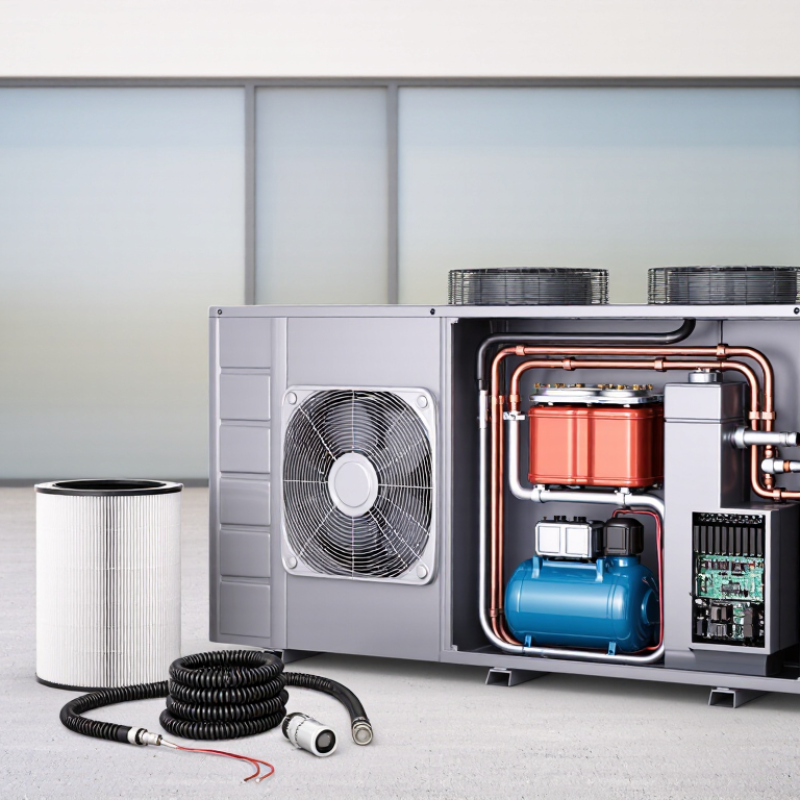
An air conditioner works as a coordinated system, not as one powerful machine. The compressor pressurizes refrigerant and starts the cooling cycle. The condenser coil releases heat outdoors. Inside, the evaporator coil absorbs heat from room air. A fan then moves cooled air through the ductwork or vents.
Each part has a specific job. The filter catches dust before it reaches the blower and coils. A dirty filter can reduce airflow and strain the motor. The thermostat measures room temperature and controls operating cycles.
Drain pans and condensate lines remove moisture collected during cooling. I have seen a blocked drain cause water damage even when the compressor worked normally. Small parts matter.
Choose replacement parts by matching the model details, measurements, electrical ratings, and refrigerant requirements. Never rely on appearance alone. A capacitor may look identical but have the wrong voltage rating. A loose connection can also create heat and shorten component life. Check the service manual and confirm specifications with a qualified technician when necessary.
Some repairs seem simple. They are not always. Personal experience can help identify symptoms, but it cannot replace testing with proper meters and safety procedures.
Record unusual noises, weak airflow, and uneven temperatures before ordering parts. That information often reveals whether the problem involves airflow, electrical control, or refrigerant movement.
Identifying the Correct Part for Your Air Conditioner Model
How to Choose the Right Air Conditioner Parts
Identifying the correct part starts with the complete air conditioner model number. A partial number is risky. Check the rating plate behind the access panel, near the outdoor disconnect, or inside the indoor cabinet. Record the model, serial number, voltage, phase, refrigerant type, and manufacturing date. A model number alone feels sufficient. It often is not.
Compare the replacement part with the original part’s voltage, microfarad rating, dimensions, terminals, and connector shape. Photograph the wiring before removal, including the wire colors and terminal labels. This small step prevents expensive mistakes.
The U.S. Department of Energy reports that heating and cooling can represent about half of household energy use, so an incorrect component may affect comfort and operating costs. The International Energy Agency also reported that space cooling used roughly 10% of global electricity in 2018.
Use the equipment manufacturer’s parts list, service manual, or a qualified distributor’s compatibility record. Independent directories can help, but verify every specification against the unit label.
Experienced technicians check revisions because one model may use different motors or control boards across production years. I still recheck the part after ordering.
Labels fade, measurements get misread, and online listings can contain errors. Keep the old component until the new part matches exactly. Never rely on appearance alone.
Comparing Replacement Options, Costs, and Installation Requirements
Choosing the right air conditioner part requires more than matching a model number. A failed capacitor is usually cheaper and faster to replace than a blower motor. However, a low-cost part may have a shorter service life. I once saw a customer choose the cheapest control board, only to pay again after a poor connection caused another failure. That decision seemed practical at first, but it was not reliable.
Compare the total cost, not only the purchase price. Include shipping, diagnostic labor, wiring changes, refrigerant recovery, and testing. Some parts fit directly, while others require adapters or updated terminals. A replacement compressor may also need specialized tools and certified handling. Electrical parts demand power isolation before inspection. Installation should follow the equipment manual and local safety requirements. A qualified technician can test voltage, resistance, airflow, and system pressure before approving the repair. Guesswork creates expensive mistakes.
Tips: Photograph every wire before removal. Check the part number and voltage rating twice. Ask whether the replacement includes gaskets, mounting hardware, or updated connectors. Request a written labor estimate. If the repair cost approaches the value of an older unit, replacement may deserve consideration, although that judgment is not always simple. A careful comparison often reveals that the “cheapest” option is only cheap on paper.
Installing, Testing, and Maintaining the New Air Conditioner Part
Choosing the right air conditioner part begins with matching its model, voltage, capacity, and connection type. A similar-looking component may still fail under load. Check the equipment label and technical manual before ordering. I once trusted a visual match and overlooked a connector size. That mistake cost time and showed me why measurements matter.
During installation, switch off the circuit breaker and confirm that power is absent with a tested meter. Power must be off. Keep the area dry. Wear insulated gloves when appropriate, and photograph wire positions before removal. Install the new part firmly, without bending terminals or trapping cables. Refrigerant-related work requires qualified service personnel because pressure and recovery procedures can create serious hazards. Follow the manufacturer’s wiring diagram and local electrical requirements.
Testing should happen before the cover is fully secured. Restore power, observe the startup sound, and check airflow, temperature change, and unusual vibration. A clamp meter can help confirm that current stays within the rated range. Do not ignore a burning smell or repeated cycling. Turn the system off and investigate. For maintenance, clean filters regularly, inspect terminals for heat marks, and keep the outdoor coil free from leaves. Record the installation date and test readings. My early notes were incomplete, which made later diagnosis harder. A simple maintenance log prevents that avoidable problem.
How to Choose the Right Air Conditioner Parts
Installing, Testing, and Maintaining the New Air Conditioner Part
This chart presents practical service intervals commonly used for air conditioner components. After installation, technicians should verify airflow, electrical connections, temperature performance, and condensate drainage. Actual intervals depend on operating conditions, indoor air quality, climate, and the equipment manufacturer’s instructions.

 Cosmetic Packaging
 Display Packaging
 CBD Packaging
 Retail Packaging
 Product Packaging
 Cigarette Packaging
 Candle Packaging
 Soap Packaging
 Chocolate Packaging
 Vape Packaging
 Food Packaging
 Window Packaging Boxes
 Gift Packaging
 Bakery Packaging Boxes
 Pizza Packaging
 Bottle Packaging
 Garments Packaging
 Custom Printed Bags
 Christmas Packaging
 Toy Packaging
 Cereal Packaging
 Jewelry Packaging
 Apparel Packaging
 Shipping Packaging
 Custom Pre Roll Boxes
 Dispenser packaging
 Eco Friendly Packaging
 Custom Health Packaging
 Pharmaceutical Packaging