How to Choose the Best Printed Boxes for Your Business?
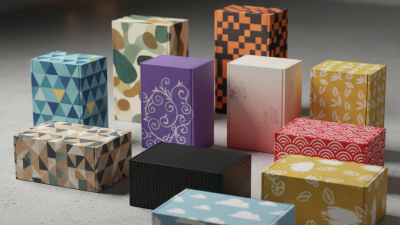
Choosing printed boxes is not merely a design decision. The right box protects products, presents your brand, and fits the way your team packs and ships orders. Packaging educator and author Walter Soroka’s work offers a useful principle: packaging must perform as well as it communicates. Looks matter. But fit matters more.
Start with the product itself. Note its weight, dimensions, fragility, and exposure to moisture or handling. A glass jar may need a snug insert, while a lightweight garment may need less structure. Measure the product and allow room for protective materials. A box that looks perfect on screen may crush easily, waste space, or slow packing. That gap between mockup and real use deserves attention.
Then consider materials, printing, quantities, and total cost. Compare board strength, finishes, color consistency, and production minimums. Ask suppliers for physical samples, not only digital proofs. Check how the printed boxes look under ordinary store lighting, and test how quickly staff can assemble them. Small details count. A glossy finish can show fingerprints; a dark interior can hide scuffs but may increase printing costs.
There is no universal best option. A premium unboxing experience may suit a specialty product, but it can add expense without improving protection. That is worth questioning. The sections ahead explain how to compare box styles, materials, print methods, and suppliers, so your choice reflects real product needs—not just a striking first impression.
Define the Product, Sales Channel, and Protection Level Required
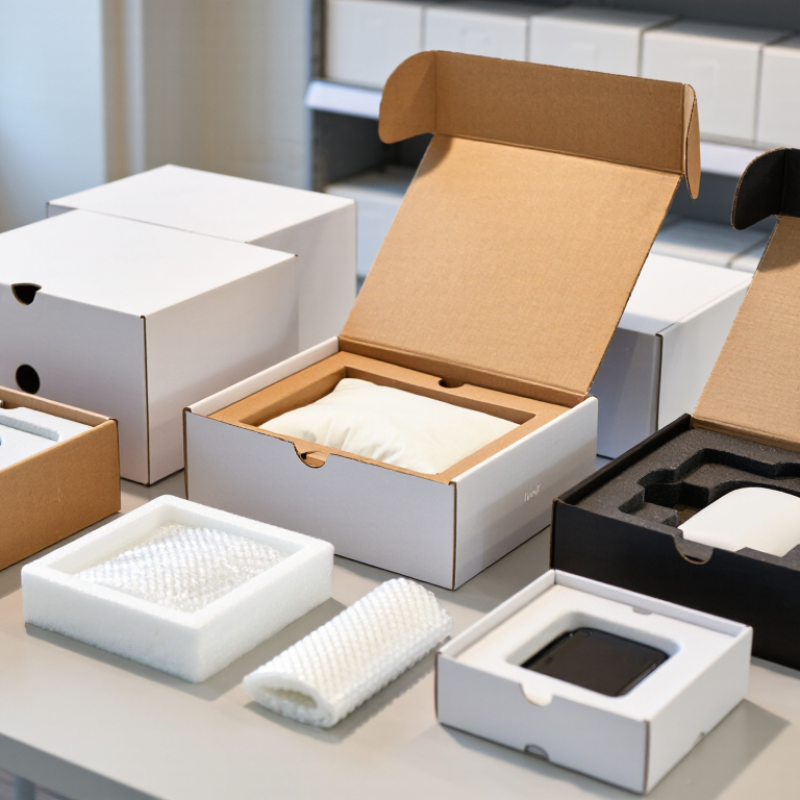
Start with the product, not the artwork. A small glass jar needs a snug insert and enough room around its lid. A flat notebook may need only a sturdy folding carton. Note the item’s weight, shape, surface finish, and any parts that can shift or scratch. Measure a real sample, not just a product drawing. Small differences matter.
Then match the box to its sales channel. Retail shelves reward clear product details and a design customers can scan quickly. Direct shipments need stronger corners and room for cushioning, since boxes may be stacked or handled roughly. For local pickup, a simple carry-friendly shape may matter more than elaborate presentation. Consider how staff will pack each order, too. A beautiful box that slows packing can become a daily frustration.
Choose protection based on actual risks. Test a filled box with the intended insert, and check whether the product moves when tilted. For shipping, make a sample shipment and inspect it on arrival; one test is useful, though it cannot represent every route. Extra material can add cost and waste without solving the right problem. It is easy to overprotect a light item and still miss a loose lid. Revisit the design when the product, channel, or packing process changes.
Compare Corrugated Grades with TAPPI T 811 Edge-Crush Testing
Printed boxes must protect products after ink, coatings, and shipping stresses are added. Compare board by edge-crush performance, not flute names alone. TAPPI T 811 measures the force needed to crush a corrugated specimen standing on its edge, reported as force per unit length. A 32 ECT grade, for example, represents a rated edge-crush value of 32 pounds-force per inch. Check the supplier’s test results, not just the grade printed on a specification sheet. Look for the tested board combination, sample conditioning, and variation between specimens. Small details matter.
Ask for tests on the actual board construction you plan to buy. A switch from single-wall to double-wall board can change cost, print feel, and stacking behavior. TAPPI T 804 provides a separate method for measuring finished-container compression, which is useful because ECT alone does not guarantee a specific stack height. Consider a box carrying dense jars: a high ECT value may help, but humidity, pallet overhang, and storage time also affect performance. Test a few packed samples under realistic conditions. A neat lab result is reassuring. It is not the whole story. I would compare at least two grades, though that adds time and sometimes feels excessive. Use the lowest grade that passes your handling tests with a sensible safety margin.
How to Choose the Best Printed Boxes for Your Business? — Compare Corrugated ECT Ratings Using TAPPI T 811
| Common ECT Rating |
Approx. Metric Equivalent |
Relative Edge-Crush Level |
Typical Packaging Considerations |
What to Check Before Choosing |
| 32 lbf/in |
5.60 kN/m |
Entry-level among the ratings shown |
Often considered for lighter products and general shipping where box size, contents, and distribution conditions are suitable. |
Check packed weight, box dimensions, stacking time, humidity exposure, and the protection required for the product. |
| 40 lbf/in |
7.01 kN/m |
Above 32 lbf/in |
May be considered when a package needs more edgewise compression capacity than a lower-rated board can provide. |
Compare the complete box specification and shipment conditions; a higher ECT rating alone does not guarantee product protection. |
| 44 lbf/in |
7.71 kN/m |
Above 40 lbf/in |
Can be evaluated for heavier loads or more demanding stacking and handling conditions, subject to package design. |
Confirm the required rating with the box supplier and consider board construction, box style, dimensions, and storage environment. |
| 48 lbf/in |
8.41 kN/m |
Above 44 lbf/in |
May suit applications that call for a stronger edge-crush specification, including some heavier or stack-sensitive shipments. |
Use actual distribution and stacking requirements to assess the specification; validate the finished package where needed. |
| 51 lbf/in |
8.93 kN/m |
Highest rating in this comparison |
May be evaluated for demanding compression requirements when supported by the overall box design and packaging tests. |
Do not select by ECT value alone. Check box dimensions, contents, pallet pattern, transit conditions, and applicable customer requirements. |
How to interpret the figures: TAPPI T 811 is a test method for measuring the edgewise compressive strength of corrugated board. The ratings above are example ECT specifications, not grades defined by TAPPI T 811. Metric values are approximate conversions from pounds-force per inch (lbf/in) to kilonewtons per metre (kN/m). Actual board and box performance depends on construction, dimensions, moisture, storage, and handling conditions.
Set Box Dimensions to Balance Product Fit, Void Fill, and Shipping Costs
Box sizing starts with the packed product, not its bare dimensions. Measure the item with its tissue, sleeve, or corner protection in place, then compare it with the box’s internal length, width, and depth. A snug fit limits movement, but it should not force the lid shut or press against delicate edges. In a packing trial, a box that looked efficient on a desk felt cramped once padding was added. Measure the real pack-out.
Leave enough space for cushioning, especially around corners and fragile surfaces. Do a tilt test. Place the item inside, close the box, and gently tilt it in several directions. If it shifts, adjust the box or add a measured amount of fill. If cushioning is crushed flat, the fit may be too tight. Loose fill can protect the product, but excess material adds handling time and waste. It is easy to overcorrect.
Extra box volume may affect shipping charges, depending on the carrier’s pricing method and route. Compare nearby box sizes using packed samples, actual weights, and your common shipping options. Don’t choose only by the smallest dimensions: a damaged corner or slower packing process can outweigh modest savings. Record the dimensions that work, then test them across several product batches. Products vary a little. Recheck after changes to the item or its protective materials.
Specify Print Quality Using ISO 12647-2 Color-Control Standards
ISO 12647-2 gives businesses a practical framework for controlling color in offset printing. When ordering printed boxes, name the standard in the specification rather than relying on “vibrant” or “color-accurate.” Those words are too vague. Ask the printer to identify the agreed printing condition, measurement method, and acceptable color variation. A signed, color-checked proof can serve as a useful reference before production begins.
The board itself matters. Its shade, coating, and surface texture can change how ink appears, even when press settings are controlled. Request a proof on the intended stock, and confirm whether it represents the final varnish or laminate. Check important colors under consistent lighting, not beside a sunny window one day and warehouse lights the next. For repeat orders, keep the approved proof and recorded measurements. That makes comparisons more meaningful.
Be realistic about limits. ISO 12647-2 supports process control; it cannot make different boards look identical. Ask the printer how solid ink colors, gray balance, and tone values will be monitored, and what tolerance applies to your job. I would avoid promising a perfect match across every batch. Even a careful specification leaves room for material variation, and that is worth discussing before the boxes are printed.
Assess Recyclability: U.S. Corrugated Recovery Reached 93.6% in 2022 (AF&PA)
When comparing printed boxes, look beyond the artwork and ask what happens after delivery. The American Forest & Paper Association reported a 93.6% U.S. corrugated recovery rate in 2022. That figure points to established collection and recycling pathways, but it does not guarantee every box will be recycled. Local curbside rules, sorting capacity, and box condition still matter. A wet or greasy box may be harder to process. Small details count.
Choose a box made primarily from corrugated fiber, and request material specifications instead of relying on a recycling symbol alone. Keep coatings and decorative layers modest; some finishes can complicate fiber separation. A simple print may be enough. Check local guidance for tape, labels, windows, or liners. Then inspect a box after shipping: can it be flattened cleanly, and is the print still legible without a plastic film? There is no perfect choice. Recycled content, durability, print quality, and local recovery options can compete. I would verify the design with the recycler serving your customers, since a technically recyclable box may still miss the local system.

 Cosmetic Packaging
 Display Packaging
 CBD Packaging
 Retail Packaging
 Product Packaging
 Cigarette Packaging
 Candle Packaging
 Soap Packaging
 Chocolate Packaging
 Vape Packaging
 Food Packaging
 Window Packaging Boxes
 Gift Packaging
 Bakery Packaging Boxes
 Pizza Packaging
 Bottle Packaging
 Garments Packaging
 Custom Printed Bags
 Christmas Packaging
 Toy Packaging
 Cereal Packaging
 Jewelry Packaging
 Apparel Packaging
 Shipping Packaging
 Custom Pre Roll Boxes
 Dispenser packaging
 Eco Friendly Packaging
 Custom Health Packaging
 Pharmaceutical Packaging