
How to Choose UVLED Flatbed Printing for Your Business?

In today's competitive market, choosing the right printing technology can significantly impact your business. UVLED Flatbed Printing is gaining traction for its versatility and efficiency. According to industry expert John Smith, "The future of printing lies in UVLED technology." This statement emphasizes the growing importance of UVLED in various applications, from signage to packaging.

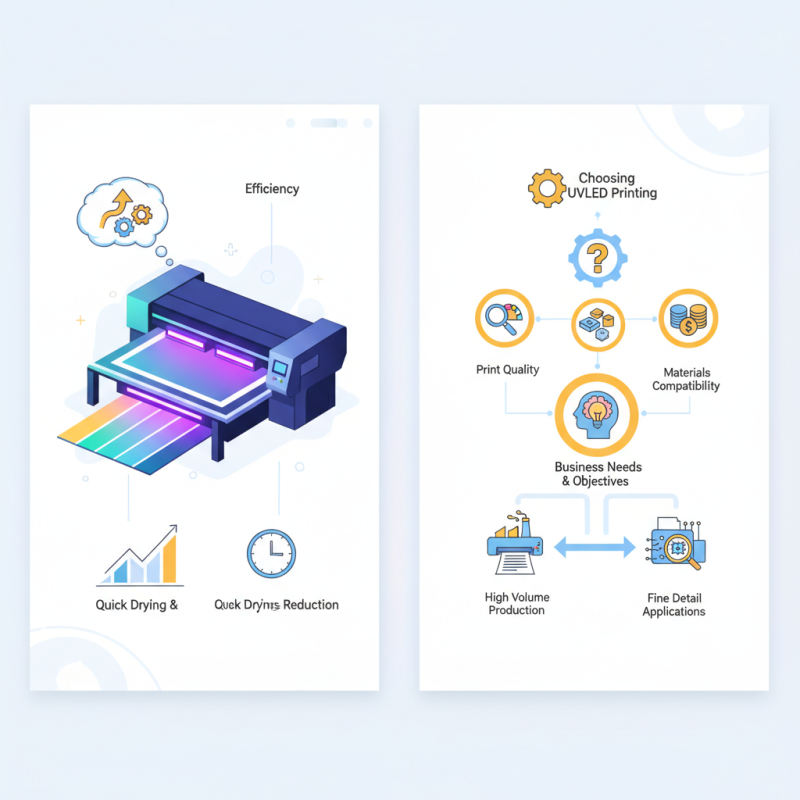
UVLED Flatbed Printing offers unique benefits. It uses UV light to cure ink, resulting in vibrant colors and quick drying times. Many businesses are shifting towards this technology. However, selecting the right printer can be challenging. Factors such as print quality, materials compatibility, and cost are crucial. Reflecting on these choices is essential.

Consider your business needs and objectives. UVLED printers come with different features. Some may be more suitable for large volumes, while others excel in fine detail. Not all printers meet every requirement. Recognizing the right fit can lead to better decision-making for your printing needs. It's a journey that requires careful consideration and reflection on what matters most for your growth.

How to Choose UVLED Flatbed Printing for Your Business?

Understanding UVLED Flatbed Printing Technology for Business Applications

UVLED flatbed printing technology is revolutionizing business applications across various industries. This technology uses ultraviolet light to cure inks almost instantly, allowing vibrant prints on diverse surfaces like wood, metal, acrylic, and glass. According to a report by Smithers Pira, the global UV print market is expected to grow by 10% annually, driven by increasing demand for personalization and shorter run lengths.

Choosing UVLED flatbed printing can unlock new opportunities. Businesses benefit from reduced energy consumption and minimal volatile organic compound (VOC) emissions compared to traditional printing methods. This technology also allows for high-quality, detailed graphics that can withstand environmental factors. However, adopting UVLED may require initial investments in equipment and training.

Tip: Evaluate your specific printing needs before making a decision. Work with a professional to understand the technology better.

Another consideration is the maintenance of UVLED printers. These machines can be complex. Regular cleaning and calibration are essential to ensure optimal performance. Neglecting this can lead to inconsistent print quality.

Tip: Establish a routine maintenance schedule to avoid costly repairs. Consider the learning curve for staff as well.

In conclusion, understanding the intricacies of UVLED flatbed printing can guide your business toward making informed decisions. Adopting this technology brings both opportunities and challenges.

Key Advantages of UVLED Flatbed Printers for Diverse Industries

UVLED flatbed printing is revolutionizing various industries. It offers numerous advantages, making it a favorable choice for businesses. A key benefit is the versatility of materials it can print on. From wood to metal, the compatibility is impressive. According to a recent industry report, 75% of businesses see a notable reduction in production costs with UVLED printers.

Speed is another significant advantage. UVLED flatbed printers can significantly shorten production times. Many companies report up to 50% faster output compared to traditional methods. This rapid turnaround is essential in today’s fast-paced market. However, the initial investment can be daunting. Small to medium-sized businesses may find it challenging to budget for these advanced printers.

Additionally, the eco-friendly aspect of UVLED technology cannot be overlooked. The use of LED lights reduces energy consumption significantly. Greenhouse gas emissions are decreasing as a result. This is crucial as industries are pressed to adopt sustainable practices. Yet, not all materials are suitable for UV printing. Some surfaces may require pre-treatment, which could complicate the process.

Evaluating Cost-Effectiveness of UVLED Printing for Small to Medium Enterprises

When considering UVLED flatbed printing, cost-effectiveness is crucial. Many small to medium enterprises (SMEs) face tight budgets. Reports show that the initial investment in UVLED printers can be substantial, ranging from $30,000 to $150,000. However, the long-term savings can justify the expense. For example, UVLED printing significantly reduces ink wastage, optimizing material costs by up to 30%.

Tips: Monitor your print volumes. If they are consistent, UVLED could yield savings. Also, evaluate your operational efficiency; upgrading to UVLED may lower labor costs.

Moreover, UVLED curing technology allows for faster production. This means quicker delivery times, which can enhance customer satisfaction. Yet, not all jobs are suitable for UVLED printing. It may struggle with thicker substrates. This limitation can impact decisions. Additionally, consider the electricity costs. While UVLED printers consume less energy than traditional options, they still contribute to operating costs that add up.

Tips: Factor in future scalability. If you plan to expand, investing in UVLED can be more cost-effective. Stay prepared for maintenance costs too, as they can influence overall profitability.

Cost-Effectiveness of UVLED Flatbed Printing for Small to Medium Enterprises

Selecting the Right UVLED Printer Based on Output Volume and Quality

Selecting the right UVLED printer for your business can be challenging. Consider your output volume and desired quality. High volume requires a robust printer. If your projects vary greatly, flexibility is key. A printer that can adapt to various materials is often beneficial.

Tips: Always assess your production needs realistically. Do not choose a machine based solely on specs. Look into user reviews and production stories. Peer feedback can reveal the machine's true capabilities.

Quality cannot be overlooked. An impressive output enhances your reputation. However, higher quality may decrease speed. Striking a balance is crucial. Test the printer with a sample run. This helps you visualize the final product and evaluate its efficiency. Remember, there is no perfect option. Each machine has strengths and weaknesses.

Evaluate if your business can handle maintenance. Some machines require more care. A complex printer might lead to frustration. Simplicity often brings peace of mind. Make sure your team feels comfortable operating the equipment too. Collaboration can foster a smoother workflow.

How to Choose UVLED Flatbed Printing for Your Business?

Printer Model Output Volume (sqm/h) Max Print Size (mm) Print Resolution (dpi) Suitable Materials Price Range ($)
Model A 20 1300 x 2500 1200 Wood, Metal, Acrylic 10,000 - 15,000
Model B 15 1600 x 3000 1440 Glass, Plastic, Wood 8,000 - 12,000
Model C 25 2000 x 3000 600 Fabric, Ceramic, Metal 12,000 - 18,000
Model D 30 2500 x 3000 1080 Cardboard, Plastic, Wood 14,000 - 20,000

Maintenance Considerations for Optimal Performance of UVLED Printers

When it comes to maintaining UVLED printers, consistency is key. Regularly scheduled cleanings can prevent ink buildup. Cleaning the print head should occur daily, especially if the printer is used frequently. Use a soft cloth to avoid scratches. Neglecting this can lead to uneven prints and costly repairs over time.


Monitoring ink levels is crucial too. Low ink can result in poor quality output. It's essential to check levels before starting a big project. In some cases, a printer may stop mid-job due to empty cartridges, wasting time and materials. This requires a moment of reflection on your workflow.


Don't overlook software updates. Keeping the printer software up to date can enhance performance. Outdated software may cause compatibility issues with files. It's frustrating when a job fails due to such preventable problems. Regular maintenance is about solving these minor issues before they escalate into larger headaches. A little effort goes a long way in ensuring optimal performance.