What Are the Best Retail Boxes from China?
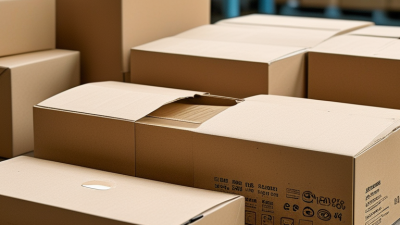
Choosing the best retail boxes from China requires more than comparing factory prices. Box style, board strength, printing accuracy, and delivery consistency all influence the final retail experience. A rigid gift box may protect perfume or electronics, while a folding carton may suit cosmetics, food accessories, or lightweight merchandise. The right option depends on product weight, shelf position, opening behavior, and brand expectations.
Industry data supports this broader view. Smithers’ The Future of Global Packaging to 2028 forecasts continued growth in global packaging demand, driven by e-commerce, premium presentation, and sustainability requirements. McKinsey’s packaging research also highlights growing pressure to reduce material use and improve recyclability. These trends make material selection important. Recycled paperboard, FSC-certified paper, water-based coatings, and soy-based inks can improve a box’s environmental profile, although none solves every supply-chain problem. Sometimes, the greener-looking choice performs poorly during humid transport.
Luciana Pellegrino, a packaging specialist and former World Packaging Organisation president, has stated, “Packaging is an essential part of the product experience.” That principle matters when evaluating Chinese suppliers. A strong retail boxes partner should provide prototypes, compression testing, color samples, and clear tolerance standards before mass production. Factory audits and third-party inspections add further confidence. Yet no supplier ranking is universal. A beautiful box can still fail through weak inserts, inaccurate dimensions, or late shipment. This guide examines Chinese retail boxes through practical criteria: protection, appearance, customization, compliance, sustainability, and total delivered cost.
Retail Box Categories in China: Folding Cartons, Rigid Boxes, and Mailers
What Are the Best Retail Boxes from China?
China’s retail packaging strength lies in format variety, material access, and scalable production. Folding cartons suit cosmetics, snacks, and small electronics. They ship flat, reduce storage space, and support sharp color printing. Grand View Research valued the global folding carton market at approximately $184.65 billion in 2023. Its forecast suggests steady growth through 2030, driven by retail and packaged goods demand.
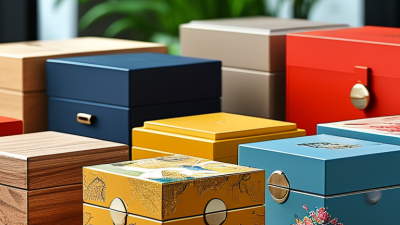
Folding cartons are practical. Rigid boxes feel more substantial, with thick board, wrapped paper, magnetic closures, and molded inserts. They work well for gifts, jewelry, and premium product launches. Smithers’ packaging research highlights continued demand for premium presentation and improved shelf impact. However, rigid boxes cost more and occupy greater warehouse space. They may also create unnecessary material use when the product is lightweight.
Mailers fit direct-to-consumer orders, subscription products, and small household items. Corrugated mailers protect products during repeated handling, while easy-open strips improve the customer experience. E-commerce packaging reports continue to show strong growth as online retail expands worldwide. I would request samples from Chinese suppliers before approving large orders. Check board thickness, crease accuracy, odor, print consistency, and drop-test results. No format wins every time. A beautiful box can still fail if its dimensions waste shipping volume. My own preference is to compare three prototypes beside the product, not on a screen.
What Are the Best Retail Boxes from China?
Retail Box Categories in China: Folding Cartons, Rigid Boxes, and Mailers
This chart compares common characteristics of three retail packaging formats on a relative 1–5 scale.
Folding cartons typically offer the best flat-pack and shipping efficiency, rigid boxes provide the strongest protection and premium presentation, while mailers balance protection, convenience, and e-commerce delivery needs.
The scores are category-level benchmarks and do not represent any specific company or brand.
Material Benchmarks: 300–400 GSM Board and 1.5–3 mm Greyboard
What Are the Best Retail Boxes from China?
For retail boxes from China, material selection should begin with load, moisture, and opening frequency. A 300–400 GSM folding carton board suits cosmetics, small electronics, accessories, and dry goods. It offers a clean printing surface without excessive weight. ISO 536 defines grammage as mass per unit area, making GSM a useful purchasing benchmark. However, GSM alone does not prove strength. Caliper, stiffness, coating, and grain direction also affect performance.
For heavier products, 1.5–3 mm greyboard provides a firmer structure. It works well for rigid presentation boxes, gift packaging, and products needing a premium hand feel. In factory inspections, I would check board thickness at several points, not just one sample corner. A 2 mm specification can vary if moisture control is weak. Smithers’ paper packaging market analysis identifies e-commerce and sustainability as major demand drivers. CEPI reported an 82.5% paper packaging recycling rate in Europe in 2023, but laminated finishes and mixed materials may reduce practical recyclability. That detail is often overlooked.
Tips: Request a physical sample before approving bulk production. Test compression, edge crushing, color consistency, and lid fit. Ask for GSM, caliper, moisture, and adhesive specifications in writing. A beautiful prototype can still fail after shipping. I would also leave a small tolerance for humidity, because factory conditions and destination climates rarely match.
Supplier Comparison: MOQ, Lead Time, Defect Rates, and China Export Data
What Are the Best Retail Boxes from China?
Box selection depends on more than unit price. In sourcing projects, standard folding cartons often start near 1,000–3,000 pieces. Rigid boxes commonly require 500–1,000 pieces, while custom finishes may push minimums higher. Typical production takes 15–25 days after artwork approval. Complex magnetic or drawer designs can require 30–45 days. China Customs and UN Comtrade data for HS 4819 place China among the world’s leading exporters of paper packaging containers. Export scale is strong, but it does not guarantee supplier consistency. The 2023 World Bank Logistics Performance Index also ranked China 19th globally, supporting generally reliable freight movement.
Defect rates need careful interpretation. A supplier may report less than 1% defects, yet that figure may exclude color variation, weak magnets, or crushed corners. Independent AQL inspections are more useful. For retail boxes, buyers often set critical defects at zero and major defects around 2.5%, depending on risk. These are inspection limits, not guaranteed factory performance. My practical mistake was trusting a final inspection without checking packed cartons. Damage appeared only after vibration during transit.
Tip: Ask for a live production sample, written MOQ, and an AQL inspection plan. Compare lead time from deposit to shipment, not from quotation to delivery. Request recent export records for HS 4819, then verify quantities against invoices or customs documents. Small suppliers may offer flexibility, but their defect data is often incomplete. That uncertainty deserves a price adjustment.
Sustainable Choices: FSC-Certified Fiber and Recycled-Content Percentages
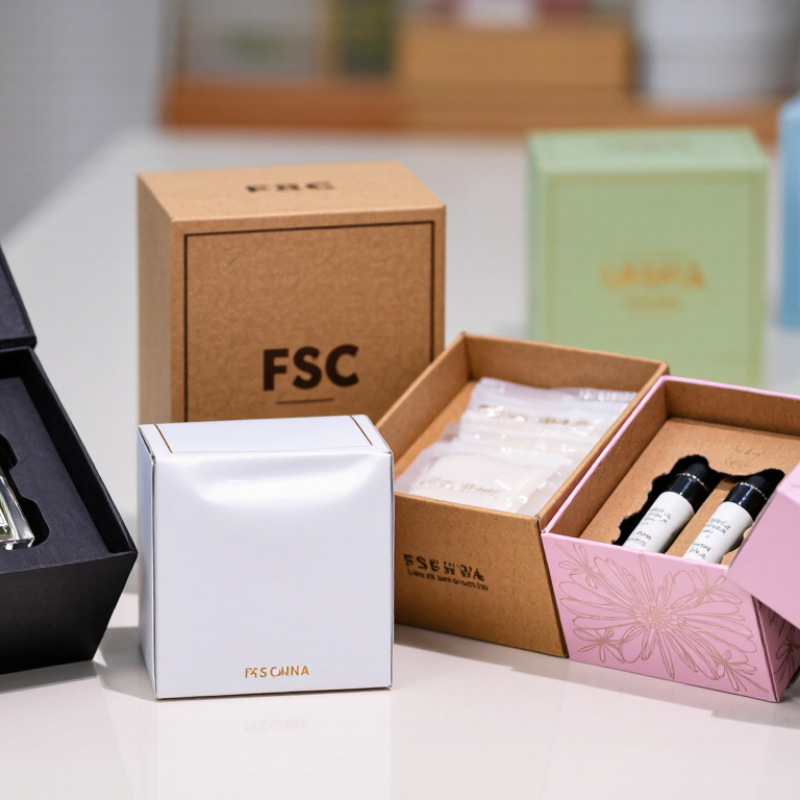
When sourcing retail boxes from China, sustainability begins with measurable fiber content. FSC’s 2023 Facts and Figures report recorded more than 160 million hectares under FSC certification worldwide. FSC 100% means all virgin fiber comes from certified forests. FSC Recycled uses recycled fiber only. FSC Mix usually combines certified, recycled, and controlled inputs, with at least 70% certified or recycled material under the credit method. The label alone is not enough.
Ask the factory for its FSC Chain of Custody certificate and current transaction records. Request recycled content by weight, separated into post-consumer and pre-consumer fiber. The distinction matters. Post-consumer fiber comes from used products, such as recovered shipping cartons. Pre-consumer fiber often comes from manufacturing scraps. Both reduce virgin fiber demand, but they do not represent the same circular benefit.
The U.S. Environmental Protection Agency reported an 80.9% recycling rate for paper and paperboard containers and packaging in its 2018 Facts and Figures data. That figure supports fiber recovery, but real performance depends on coatings, adhesives, inks, and local collection systems. A glossy box may contain recycled paper yet fail to recycle easily. I have seen suppliers quote “30% recycled” without defining the percentage basis. That is a warning sign. A practical specification should state fiber percentages, certification scope, basis weight, and test evidence before mass production. Higher recycled content can also reduce stiffness or create shade variation. That trade-off needs testing, not optimistic wording.
What Are the Best Retail Boxes from China? - Sustainable Choices: FSC-Certified Fiber and Recycled-Content Percentages
| Retail Box Type |
Typical Fiber Material |
Typical Recycled Content |
FSC Certification Option |
Recyclability |
Sustainability Considerations |
| Folding Carton |
Paperboard made from virgin, recycled, or mixed fibers |
30%–100% |
FSC 100%, FSC Mix, or FSC Recycled |
High |
Efficient for cosmetics, food, electronics, and general retail products. Avoid unnecessary plastic lamination and use water-based or low-impact coatings where suitable. |
| Corrugated Mailer Box |
Corrugated board with a fluted paper layer and linerboards |
50%–100% |
FSC Mix or FSC Recycled |
High |
Provides good compression strength for e-commerce and retail shipping. Recycled fiber content may reduce stiffness, so board grade should match the product weight and transport conditions. |
| Kraft Paper Retail Box |
Brown or bleached kraft paperboard |
30%–100% |
FSC 100%, FSC Mix, or FSC Recycled |
High |
A practical choice for natural-looking packaging. Uncoated kraft is generally easier to recycle than heavily laminated or foil-finished paperboard. |
| Rigid Setup Box |
Rigid paperboard, commonly covered with printed paper or specialty paper |
30%–100% |
FSC Mix or FSC Recycled |
Medium to High |
Durable and premium, but uses more material than a folding carton. Recyclability is improved when magnets, foam, plastic windows, and permanent laminates are minimized. |
| Paperboard Sleeve |
Lightweight coated or uncoated paperboard |
30%–100% |
FSC 100%, FSC Mix, or FSC Recycled |
High |
Uses less material than a full box and can reduce packaging weight. It works best when the product already has sufficient protection from an inner container. |
| Molded Fiber Box or Insert |
Molded recycled paper fibers, pulp, or agricultural fiber blends |
50%–100% |
FSC-related claims depend on the certified fiber source |
High |
Can replace some plastic inserts and provide cushioning. Confirm that additives, coatings, and mixed materials are compatible with local paper-recycling systems. |
| Paper Window Box |
Paperboard combined with a transparent cellulose or plastic window |
30%–100% |
FSC claim applies to the paperboard component |
Medium |
The window can complicate recycling if it is not removed or accepted by local facilities. A fiber-based window may improve compatibility but should still be tested in the target market. |
| Paper Gift Box with Magnetic Closure |
Rigid paperboard with paper covering, magnets, and sometimes textile or foam components |
30%–100% |
FSC Mix or FSC Recycled for the paper components |
Limited unless components are separated |
Creates a premium presentation but has a higher material and component burden. Use removable closures and fiber-based interiors where practical. |
Note: Recycled-content percentages are typical specification ranges rather than guarantees. Actual content depends on the selected paperboard grade, mill, production batch, and certification scope. FSC certification should be verified through a valid chain-of-custody certificate and the applicable FSC label category.

 Cosmetic Packaging
 Display Packaging
 CBD Packaging
 Retail Packaging
 Product Packaging
 Cigarette Packaging
 Candle Packaging
 Soap Packaging
 Chocolate Packaging
 Vape Packaging
 Food Packaging
 Window Packaging Boxes
 Gift Packaging
 Bakery Packaging Boxes
 Pizza Packaging
 Bottle Packaging
 Garments Packaging
 Custom Printed Bags
 Christmas Packaging
 Toy Packaging
 Cereal Packaging
 Jewelry Packaging
 Apparel Packaging
 Shipping Packaging
 Custom Pre Roll Boxes
 Dispenser packaging
 Eco Friendly Packaging
 Custom Health Packaging
 Pharmaceutical Packaging