
Cosmetic Packaging
Display Packaging
CBD Packaging
Retail Packaging
Product Packaging
Cigarette Packaging
Candle Packaging
Soap Packaging
Chocolate Packaging
Vape Packaging
Food Packaging
Gift Packaging
Bakery Packaging Boxes
Pizza Packaging
Bottle Packaging
Garments Packaging
Custom Printed Bags
Christmas Packaging
Toy Packaging
Cereal Packaging
Jewelry Packaging
Apparel Packaging
Shipping Packaging
Custom Pre Roll Boxes
Dispenser packaging
Eco Friendly Packaging
Custom Health Packaging
Pharmaceutical PackagingChina is becoming a global leader in the application of motors across various industries. This growth is driven by innovation and advanced technology. Manufacturers are continuously improving the efficiency and performance of their motors. Buyers worldwide are increasingly interested in these advancements.
The application of motors in China spans sectors like automotive, aerospace, and consumer electronics. Each of these industries showcases unique requirements and challenges. Chinese companies often face criticism for not prioritizing sustainability or ethical practices. However, many are making strides in these areas.
Global buyers must consider multiple factors when choosing motor applications from China. Quality, reliability, and after-sales service are critical. It’s important to conduct thorough research. Partnering with reputable suppliers can greatly impact overall satisfaction. However, there is still room for improvement in transparency and communication. Understanding these intricacies can lead to successful partnerships.
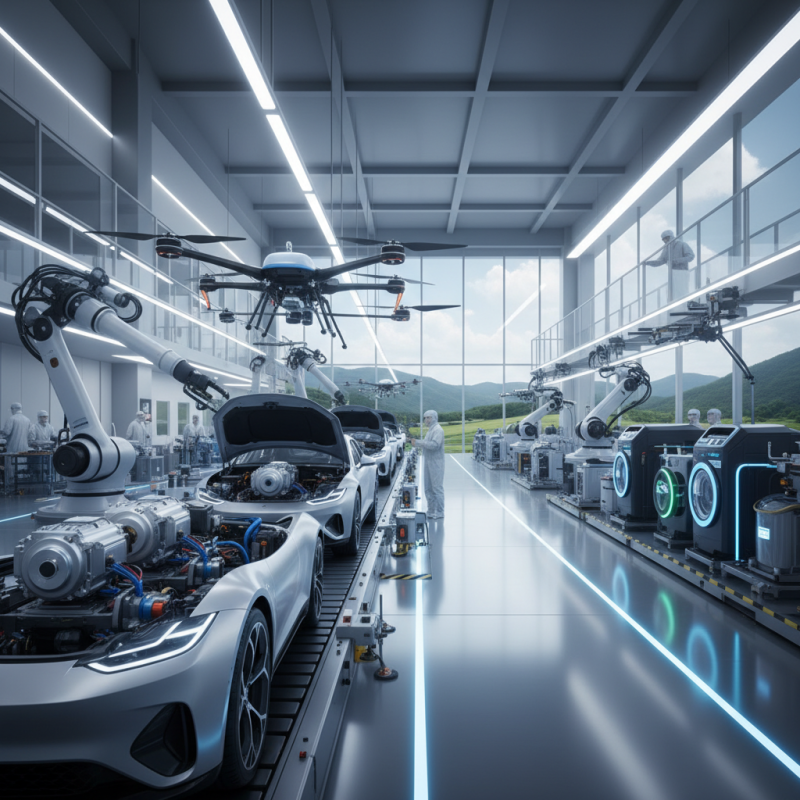
In recent years, China has emerged as a leading player in the global motor market. Various industries use advanced motor technology to improve efficiency and productivity. For instance, the automotive sector relies heavily on electric motors for vehicle propulsion. These motors have revolutionized driving experiences, promoting sustainability.
The manufacturing industry employs motors in robotic automation systems. This enhances production lines and reduces human error. The use of precision motors in CNC machines has transformed fabrication processes, resulting in higher accuracy and lower costs. Similarly, the textile industry utilizes specialized motors for spinning and weaving, creating high-quality fabrics.
Tips: When selecting motors, consider efficiency ratings. A higher rating often leads to reduced energy consumption. Ensure compatibility with your machinery to avoid costly modifications. Regular maintenance boosts motor lifespan and performance. Choosing the right type of motor can significantly impact production efficiency.
In agriculture, motors are powering modern irrigation and harvesting equipment. These advancements help increase yields and reduce labor costs. Even in the renewable energy sector, motors play a crucial role in the functioning of turbines. While China's innovations in motor technology are impressive, there is always room for improvement. Continuous research and development can address current limitations and create even better solutions for global markets.
When exploring the global motor market, China offers a diverse range of options for international buyers. The primary types of motors available include AC motors, DC motors, and stepper motors. AC motors dominate due to their efficiency in various industrial applications, with a market share of approximately 45% globally, according to recent industry reports.
DC motors are also prevalent, particularly in automotive and consumer electronics. They offer high torque at low speeds, making them ideal for precision applications. Stepper motors are gaining traction in robotics and automation due to their precise control, valued especially in CNC machinery and 3D printing.
Tips: Always check for compliance certifications. Buyers should ensure that the motors meet international safety and quality standards. Conducting due diligence in selecting suppliers is crucial to avoid potential pitfalls.
It's important to consider environmental factors such as energy consumption and sustainability when selecting motors. Many manufacturers are pivoting to energy-efficient designs. However, the challenge remains in balancing performance and cost. Keeping abreast of emerging technologies can also guide buyers in making informed decisions.
Electric motors are revolutionizing Chinese manufacturing. Their versatility allows for use in various sectors, from automotive to robotics. For instance, electric motors power assembly line robots, making production faster and more efficient. This boosts productivity and reduces human error, but it also raises concerns about job displacement.
In renewable energy, electric motors drive innovations in wind and solar power. They convert energy more effectively and with less waste. This is crucial as China pushes towards sustainable manufacturing. However, reliance on new technologies necessitates constant assessment. Are these advancements truly sustainable, or merely a temporary fix?
Moreover, the integration of smart technology is enhancing motor applications. Data analytics optimize motor performance, minimizing downtime. This leads to cost savings, but it also complicates maintenance. Manufacturers must ensure their workforce is trained to handle complex systems. Balancing innovation with skill development poses a challenge. The journey is filled with opportunities, yet it also invites critical evaluation of future impacts.
In the global market, Chinese motors are rapidly gaining traction. A key aspect is their adherence to quality standards and certifications, which are essential for international trade. Many manufacturers comply with ISO 9001, a standard that ensures consistent quality. This certification indicates the company’s commitment to quality management.
Additionally, compliance with CE marking is vital for products entering the European market. The CE mark demonstrates that the motors meet EU safety, health, and environmental protection requirements. According to a recent report from MarketsandMarkets, the global electric motor market is projected to reach $167 billion by 2025, with substantial contributions from China.
However, some manufacturers may not maintain consistent quality controls. This inconsistency can lead to issues in reliability and performance. It’s crucial for buyers to conduct thorough due diligence. Understand the quality certifications relevant to your market and seek suppliers who maintain stringent quality checks. Investing time in verifying these standards can ultimately save money and frustration in the long run.
China's motor technology is evolving rapidly. The country is leading in innovation, focusing on efficiency and sustainability. Lightweight materials are increasingly used in designs, which boost performance and reduce energy consumption. This trend resonates with global demands for greener solutions.
China also emphasizes smart motors. These devices integrate IoT capabilities for real-time monitoring. Users can access data remotely, optimizing performance. While promising, this technology raises questions about data security. Adopting smart motors means relying on stable networks, which may not be universally available.
The push for electric and hybrid vehicles drives electric motor advancements. Motor design is adapting, prioritizing compactness and power. Despite progress, some aspects require further exploration. New materials need extensive testing for durability. As the market grows, aligning with international standards will also pose challenges.
| Application | Motor Type | Power Range (kW) | Efficiency (%) | Emerging Trend |
|---|---|---|---|---|
| Electric Vehicles | Permanent Magnet Synchronous Motor | 50-200 | 95 | High Torque Density |
| Industrial Automation | Stepper Motor | 0.5-10 | 85 | Precision Motion Control |
| Home Appliances | Brushless DC Motor | 20-100 | 90 | Smart Connectivity |
| Renewable Energy | Induction Motor | 10-500 | 92 | Grid Integration |
| Aerospace Applications | Switched Reluctance Motor | 1-50 | 88 | Lightweight Design |
© 2007 - 2025 The Custom Packaging. All right reserved.