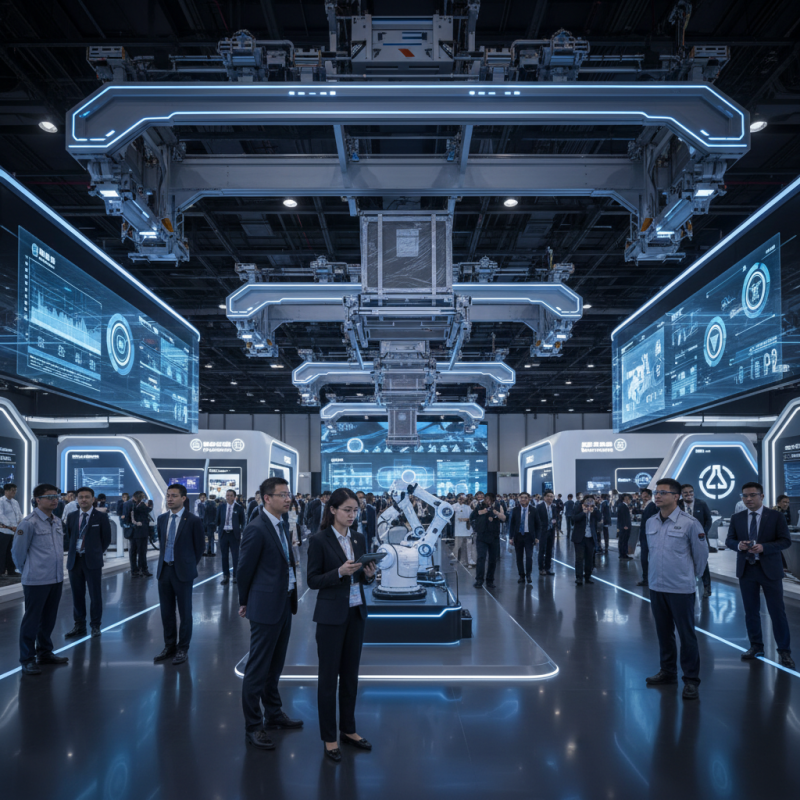

Top 5 Benefits of Automated Crane System at 2026 Canton Fair?

As the 2026 Canton Fair approaches, the integration of an Automated Crane System presents significant advantages for exhibitors and attendees alike. Industry expert, Dr. Emily Wang, states, "The Automated Crane System revolutionizes logistics, making operations more efficient." This technology optimizes the movement of goods across the vast exhibition space, which spans 1.55 million square meters.

Moreover, real-time navigation improvements complement the Automated Crane System. Attendees can swiftly navigate through advanced sectors, such as manufacturing and electronics. This ensures that participants spend less time in transit and more time engaging with innovative products and ideas. However, reliance on automation also raises questions about workforce displacement. Will handlers find their roles increasingly limited?

The Automated Crane System not only enhances efficiency but also fosters a more organized environment. Exhibitors benefit from reduced wait times and clutter. Ensuring that this system operates smoothly will be a challenge. Continuous reflection on its implementation will be vital for maximizing its benefits and making the most of the Canton Fair experience.

Top 5 Benefits of Automated Crane System at 2026 Canton Fair?

Benefits of Increased Efficiency with Automated Crane Systems

The 2026 Canton Fair showcases the significant impact of automated crane systems on operational efficiency. With automation, industries report an increase in productivity by up to 30%. This data aligns with findings from a recent sector study that highlights reduced manual labor and enhanced precision. As a result, companies can save time and reduce injuries.

Automated crane systems streamline material handling. They minimize human error and optimize workflows. In fact, studies indicate that mishaps in manual operations drop by 50% when automated systems are in place. This attracts businesses seeking more reliable methods in competitive markets.

Despite these advancements, some industries still hesitate. The initial investment can be daunting, and integration may pose challenges. Some companies struggle to adapt their workforce to new automated processes. Nevertheless, the long-term benefits, including cost savings and increased output, make a compelling case for adopting these technologies. The future of logistics hinges on embracing automation at venues like the Canton Fair.

Top 5 Benefits of Automated Crane System at 2026 Canton Fair

Enhanced Safety Features of Automated Crane Systems

The automation of crane systems significantly enhances safety at industrial settings such as the Canton Fair. These advanced systems reduce human errors, which are often a leading cause of accidents. Automated cranes operate with precision, minimizing the chance of load drops or collisions. They utilize sensors to detect obstacles and adjust their movements accordingly. This real-time response helps protect workers and equipment.

Moreover, automated cranes can function in harsh environments. They are designed to work in extreme temperatures and challenging conditions. This reduces the need for human labor in high-risk areas. However, reliance on technology raises concerns. What happens during a system failure? Regular maintenance and checks are essential to ensure safe operations. Workers still need training to manage automated systems properly.

Despite these advancements, human oversight remains critical. Automated systems can malfunction or misjudge situations. Continuous monitoring is essential to maintain safety standards. While the benefits are clear, understanding the limitations is just as important. The push for automation must be balanced with a commitment to safety and preparedness.

Cost Savings from Reduced Labor Requirements in Crane Operations

Automated crane systems are revolutionizing the way industries handle heavy lifting. One significant advantage is the cost savings achieved through reduced labor requirements. According to recent industry reports, businesses can cut labor costs by up to 30% when using automated systems. This reduction allows for reallocation of resources to other critical areas.

Employing fewer workers means reducing expenses like training, medical benefits, and overtime pay. It's essential to note that every crane operation's needs vary. Organizations must assess their specific contexts to understand fully where savings can be made. Automation is not a "one-size-fits-all" solution; flexibility is key.

Tip: Invest in training for your existing workforce. Equip them with skills to work alongside automation technologies. This can ease the transition process. Moreover, remain open to tweaking your automation strategy. Some businesses initially may struggle with implementation. Adjusting your approach based on real-time feedback can maximize benefits.

In conclusion, while automated crane systems can lead to substantial cost savings, organizations must critically evaluate the entire operation. Clarity on how changes impact labor dynamics is vital for a smooth transition. Always revisit your automation strategy to adapt to ever-changing market conditions.

The Role of Smart Technology in Automated Crane Systems

Automated crane systems are transforming efficiency at events like the 2026 Canton Fair. Smart technology plays a crucial role in their operation. These cranes use sensors and AI to optimize movements. This reduces human error and increases safety. By automating heavy lifting, the workload decreases significantly.


Tips: Ensure regular maintenance for crane systems. This helps prevent unexpected failures. Also, train staff to understand and monitor the technology. Understanding the system’s capabilities is key to maximizing its benefits.


Smart technology allows real-time data analysis. Managers can track performance metrics instantly. This data helps improve logistics planning. However, reliance on technology can lead to challenges. Not all staff may adapt quickly. Some may prefer traditional methods, leading to friction.


Tips: Encourage a culture of adaptability. Workshops can help staff embrace new technologies. Open discussions foster collaborative problem-solving as well.

Environmental Impact of Automated Crane Systems at Trade Fairs

Automated crane systems significantly impact the environment, especially at trade fairs like the 2026 Canton Fair. These systems reduce energy consumption with their efficient designs. By minimizing the need for human labor, they lessen the carbon footprint. Less manual operation means fewer emissions and improved air quality.

Tips: Consider using automated cranes for logistical tasks. They optimize space and streamline operations. This can lead to less congestion and lower transportation emissions at fairs.

However, transitioning to automated systems can pose challenges. The initial setup may require significant investment. There is also a need for training personnel to manage these advanced systems properly. Nonetheless, the long-term benefits are often worth the challenges faced initially.

Reducing waste is another key aspect. Automated cranes can handle materials with precision. They minimize damage and ensure that resources are used effectively. By reflecting on this impact, businesses can make more sustainable choices.